
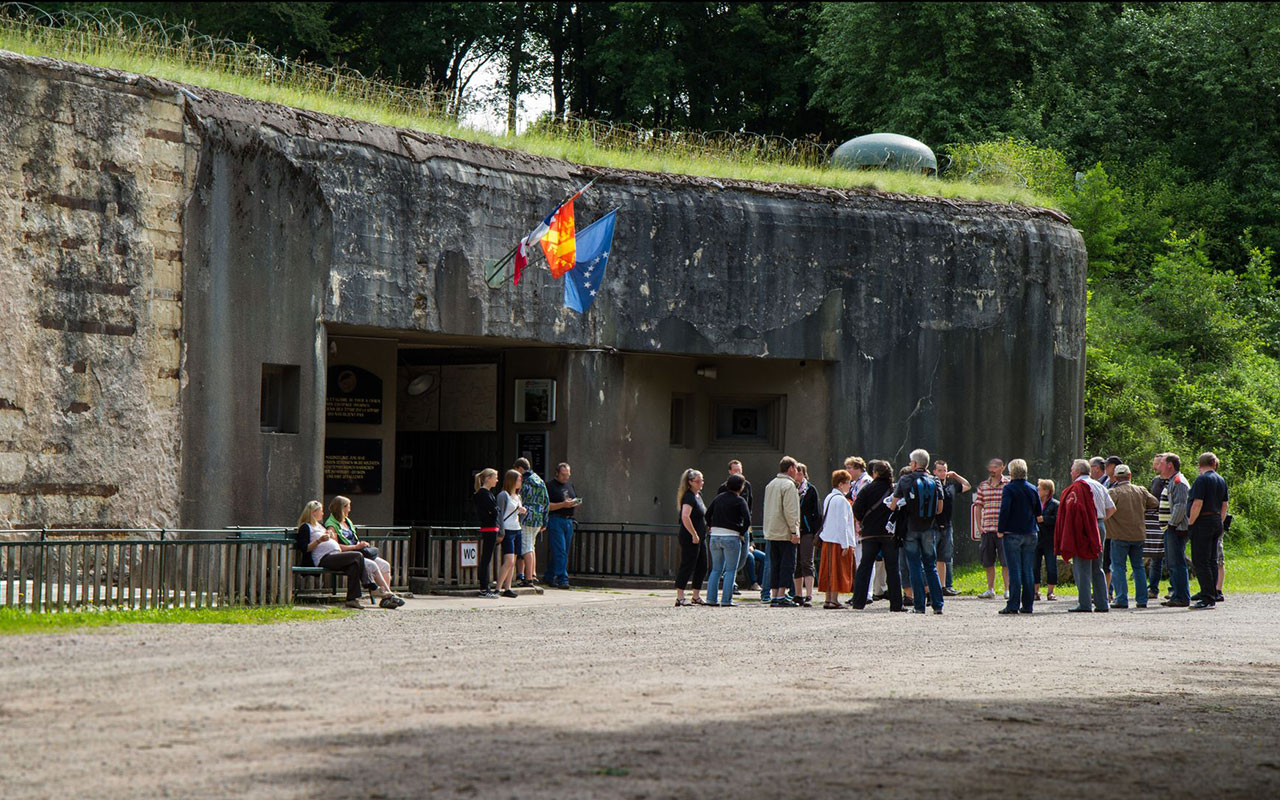
FORTE CULTURA Stop: Fort Four à Chaux, Lembach (FR), part of the Maginot Line
One of the most important forts of the Maginot Line in Alsace
Experience European history up close
The Four à Chaux fort is one of the 108 forts of the Maginot Line, which stretches for 750 km along France’s north-western border.
Built between 1930 and 1935, the fort is one of the most important sites on the Maginot Line in Alsace and was intended to secure the Sauer Valley. The 26-hectare mountain fortress is situated south of Lembach and comprises around 5 km of underground tunnels extending up to 30 metres below ground. The Four à Chaux fortress was built with six combat blocks designed to accommodate approximately 580 soldiers.
The name Four à Chaux comes from a former lime kiln nearby, which was in operation until 1939 and gave its name to the entire region. The name became the common, civilian name for the fort; in wartime, its code name was „A4“.
Visitors can discover original items of equipment and receive information on how the Maginot Line worked and its significance during the Second World War.
The guided tour (1.5 km) begins at the crew entrance and leads through the barracks, the kitchen, the signals centre and the command post to Bunker 2, which houses a 75-mm gun turret (Model 1932). The tour then continues down the inclined plane via the inclined lift to the area around the ammunition entrance. In addition to the engine room and the power station, there is also a small museum here. At the end of the tour, visitors leave the facility via the ammunition entrance.
The above-ground site is not open to the public. It is military property and entry is prohibited. Entering the site is life-threatening due to the infantry obstacles still present there (including buried steel spikes).

Discover the Four à Chaux in Lembach :

Fort Four à Chaux is a 20th-century military bunkers and was part of the Line of defence The Maginot Line.

Bunkers/Combat blocks
The Four à Chaux was equipped with six combat blocks: blocks 1–3 for the artillery, blocks 4 and 5 for the infantry, and block 6 for the infantry casemate. The original plans called for eight combat blocks, but only six were actually built.
The combat modules are connected to one another via a tunnel system. Above ground, the combat modules – which vary in design and configuration to accommodate different weapon systems – are visible as domes. Each combat module is equipped with one or two domes (cups).
Gun turrets for cannons and mortars, rapid-fire guns, grenade launchers and anti-tank barriers could be extended from inside the bunkers and still convey notions such as »invincibility« and »defensiveness« to this day. Outside the bunker complexes, half-concealed, heavily reinforced retractable domes for guns and well-camouflaged emergency and escape exits in the woods still bear witness to these formidable defences.
Block 1 was severely damaged by explosions carried out by the German Wehrmacht after 1940 and was not repaired.
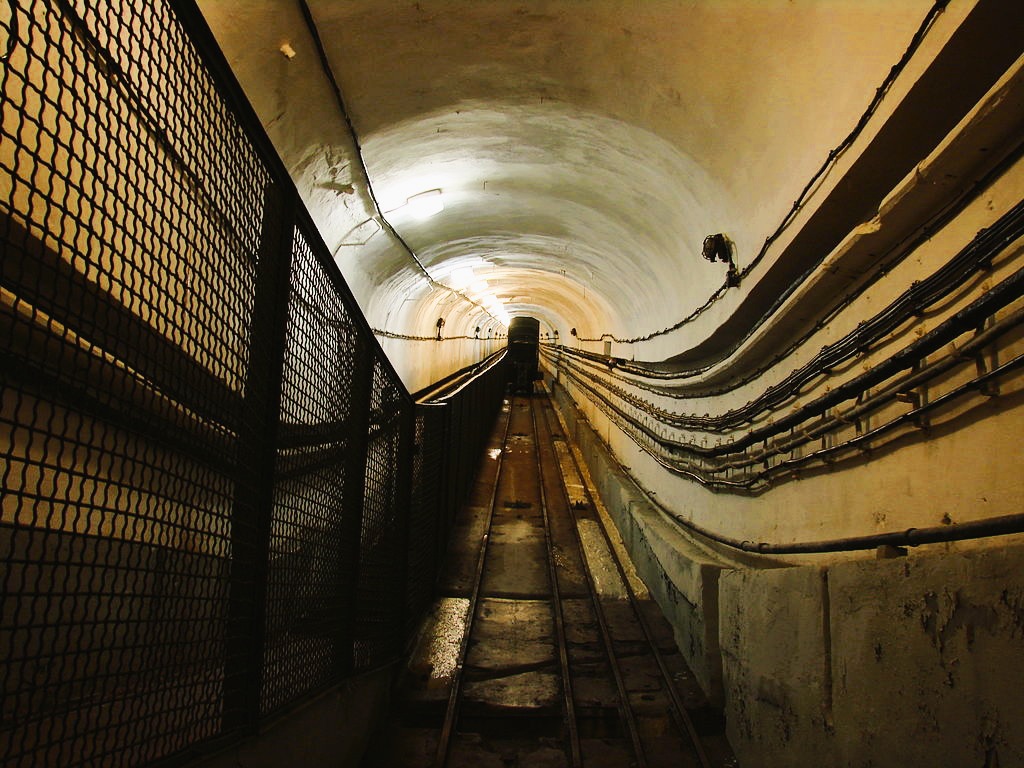
Inclined lift
As the ammunition entrance to the Four à Chaux is situated considerably lower than the crew entrance, an inclined plane leads upwards to the connecting passages of the other bunkers. A counterweight-operated inclined lift with a winch ran along this plane. An inclined lift of this kind, running from the bottom to the top, is unique in northern France, as all other inclined lifts run downwards.

Underground barracks
As is customary for such facilities, the underground barracks at Fort à Chaux comprised a supply section for storing food, a commercial kitchen, rest and standby rooms with showers and toilets, a medical wing with an operating theatre, and a technical wing housing power generation and heating systems, as well as workshops. Fresh water was drawn from an artesian well 214 metres deep.


Guided tours of the Four à Chaux fort – Maginot Line
From 2 January to 31 March: Guided tours on Saturdays and Sundays at 2.30 pm in French and German.
From 1 April to 30 April: Daily guided tours at 2 pm and 4 pm in French, and at 1.30 pm and 3.30 pm in German.
From 1 May to 30 September: Daily guided tours at 10 am, 2 pm and 4 pm in French, and at 10.30 am, 1.30 pm and 3.30 pm in German.
From 1 October to 31 October: Daily guided tours at 2 pm and 4 pm in French, and at 1.30 pm and 3.30 pm in German.
From 1 November to 31 December: Guided tours on Saturdays and Sundays at 2.30 pm in French and German.
The guided tours last around 2 hours. The 1.5 km-long walking route takes you through two floors. Due to the constant temperature of 13°, warm clothing is required even in summer.
PRICES
Adults: €9.00.
School pupils and university students: €6.00.
Child (aged 6 to 17): €5.00.
Family with 1 child (aged 6 to 17): €20.00.
Families with two or more children (aged 6 to 17): €24.00.
COMBINATION TICKET
(Fleckenstein Castle / Maginot Line – Four à Chaux)
Adult: €11.50.
Children (aged 6 to 17): €6.50.
GROUPS
Groups of 20 or more people (by prior arrangement).
Group of adults: €8.00 per person.
School groups (aged 6 to 17): €4.00 per pupil.
Groups of fewer than 20 people: €160.00 (fixed price).
Guided tours for groups are available all year round by prior arrangement, in French, German or English.
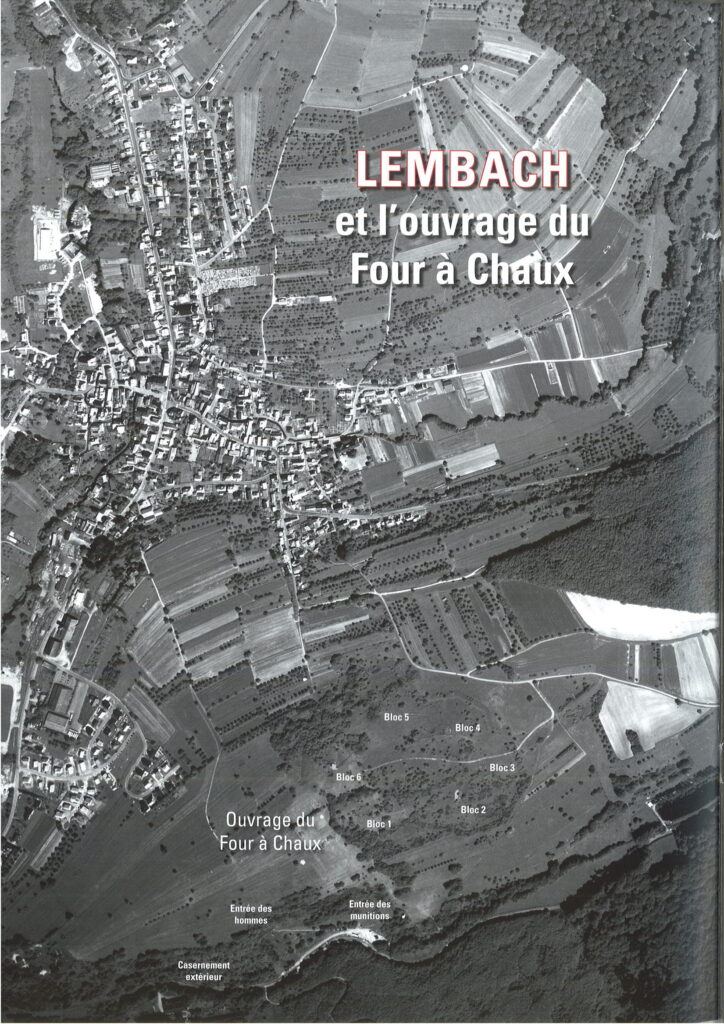
Four à Chaux Fortress, Lembach
The Maginot Line was often regarded as a defensive barrier along the Franco-German border. In fact, the line actually stretches from the north of France to the Mediterranean. The section that served to defend the Franco-Italian border was also known as the Alpine Line.
Historical Overview – Four à Chaux Works
1930–1935: Construction of the factory
The fort was manned in 1938 by troops from the „165e Régiment d’Infanterie de Forteresse (165e RIF)“ (165th Fortress Infantry Regiment), the „168e Régiment d’Artillerie de Position (168th RAP) and the “15th Engineer Regiment„ (15th Pionier-Regiment). It was from here that fire was first opened on German patrols on 20 May 1940.
Following the armistice of 22 June 1940, French troops remained in the fortress until 1 July 1940, when they were forced by the French high command to surrender to the German forces. This applied to the entire Maginot Line.
May 1940: Artillery engagements against enemy patrols
24 June 1940: last artillery barrage
1 July 1940: The garrison at Four à Chaux surrenders, with full military honours, six days after the armistice, and is disarmed on 2 July 1940
1940–1944: Occupation of the factory by the German Wehrmacht
1951–1953 Major refurbishment work at the factory
Between 1951 and 1953, the French Army had the artillery fort restored, with the exception of Block 1. It still belongs to the Air Force today. The Lembach & Surrounding Area Tourist Association has been opening the artillery fort to the public since 1983. In addition to the complex itself (troops’ entrance, barracks, Block 2, etc.), visitors can view a museum featuring a memorial to the French and German war dead. Individual guided tours are not available.
1983: Opened to the public by the Lembach and Surrounding Area Tourist Association (S.I.L.E)


Architecture Four à Chaux
The fortification was built into a hill approximately 270 metres high, situated between the Sauer and the Schmelzbach. Due to the very narrow ridge, only a very compact artillery fort, with a length of around 650 – which was small by Maginot Line standards – could be constructed. Between 1930 and 1935, a total of eight blocks were constructed. Access to the fortification is at ground level via the crew entrance. The lower-level ammunition entrance was fitted with an electric inclined lift which transported ammunition and supplies upwards. Such an inclined lift leading upwards is unique in northern France, as all other inclined lifts lead downwards. Deliveries were initially made by lorry only, but from May 1940 onwards via the field railway, which had been completed by then.
Another remarkable feature of the Four à Chaux is the well. Next to the power station is an artesian well 214 metres deep. This well supplied 6,000 litres of drinking water per hour at a temperature of 16 degrees. It fed three water tanks with a total capacity of 150,000 litres.


The Four á Chaux factory is situated in the heart of the Regional Nature Parks of the Northern Vosges. The Treetop Walk – Chemin des Cimes Alsace offers visitors the chance to stroll amongst the trees and relax. With a walking trail at heights ranging from 5 to 23 metres and a total length of 1,050 metres, the Chemin des Cimes Alsace offers a unique experience of nature. The highest point is the 29-metre-high panoramic tower, featuring a 75-metre-long slide in the centre. Once you reach the top of the tower, you’ll be treated to a breathtaking view. As one of the highest points in the foothills of the Vosges, the tower offers a 360° panoramic view of the Rhine Valley, the Black Forest and the Northern Vosges. The path is designed to be accessible. With a maximum gradient of 6%, it is possible for wheelchair users and families with pushchairs to enjoy a pleasant stroll.
A restaurant with a terrace and conservatory serves delicious local specialities. The gift shop offers a wide selection of sustainable and local products.
The numerous medieval castles in the Northern Vosges Regional Nature Park in the northern Vosges are well worth a visit: the cultural sites to be explored include ruins perched high up, offering attractive opportunities for climbing enthusiasts.
The UNESCO Pfälzerwald-Northern Vosges Biosphere Reserve offers not only stunning landscapes but also a wide range of activities and attractions. The St. Anna Iron Mine Visitors’ Tunnel is both an iron ore mine listed as a technical heritage site and a bat roost. The Fleckenstein Castle with the Fleckenstein Castle – Children’s Adventure World is a family favourite not far from the Four à Chaux factory.


FORTE CULTURA travel recommendations
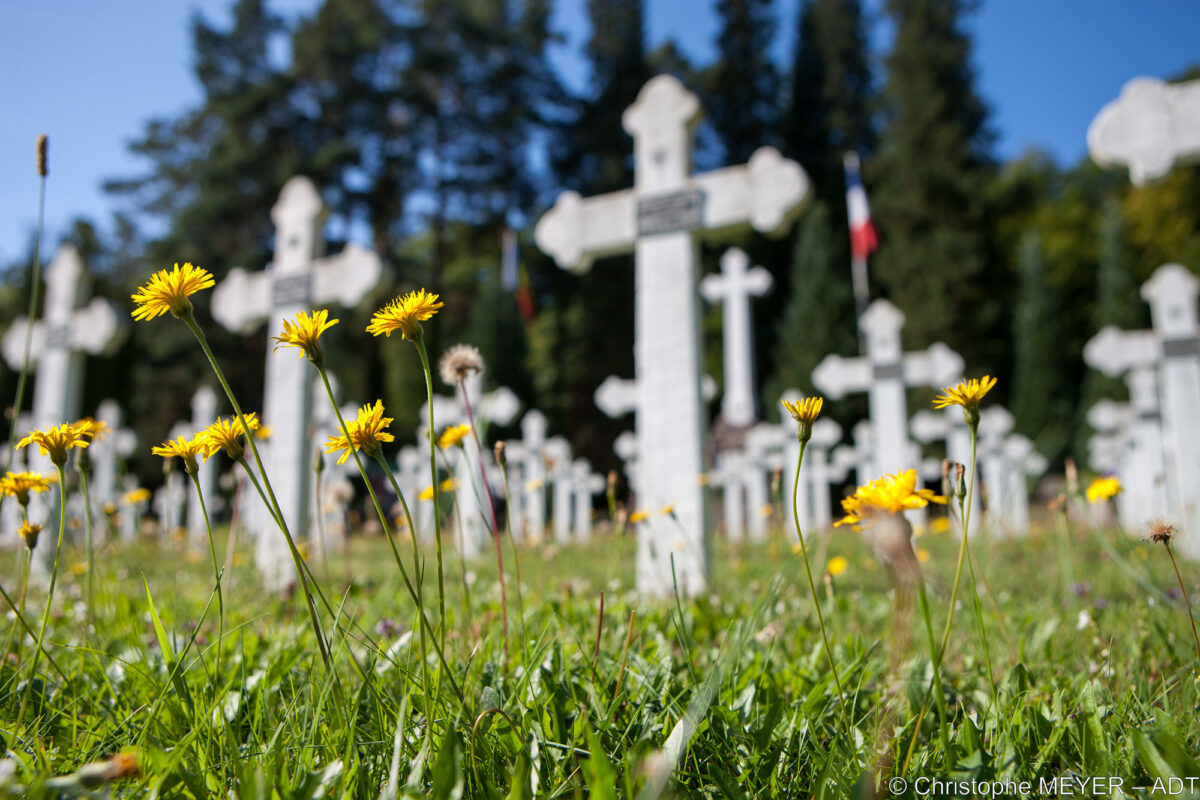
Route of military history and remembrance in Alsace
The route of castles and fortified towns in Alsace includes more than 50 sites. Explore the fascinating history of Alsace. Admire wildly romantic castle ruins, charming historic towns and marvellous views. Meet the people who bring this cultural heritage to life every day....
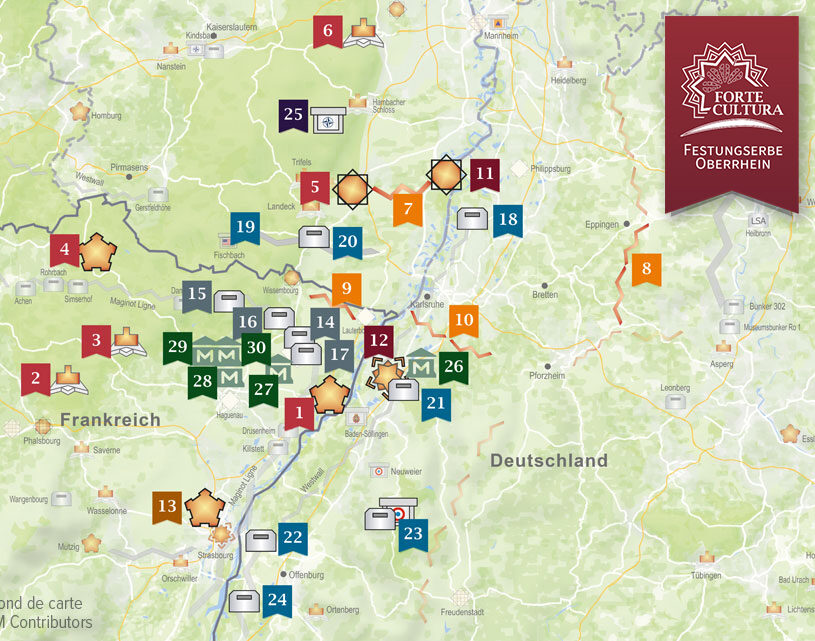
Cultural heritage
fortified monuments
of the Upper Rhine region
The Upper Rhine region is one of the most fought-over regions in Europe. Fortified monuments from all eras bear witness to this exciting cultural history. Today they are monuments full of life and culture.
Discover the history of fortress construction over the last 350 years in the 30 FORTE CULTURA fortresses and museums on the Upper Rhine.
Events at Fort Four á Chaux in Lembach
ESCAPE Game – The botanical threat „PHLOX RHIZOME“ in the heart of the Maginot bunker
Every Friday, Saturday and Sunday
Contact us

Maginot Line: Lembach – Four à Chaux
D65, Pfaffenbronn junction, 67510 Lembach, France
Tel.: +33 (0)3 88 94 48
Tourism partner of Fort à Chaux




Wenn du dies siehst, nachdem deine Seite vollständig geladen wurde, fehlen leafletJS-Dateien.
 Deutsch
  English (UK)
  Français
  Italiano
  Polski
  Español
Schreibe einen Kommentar