
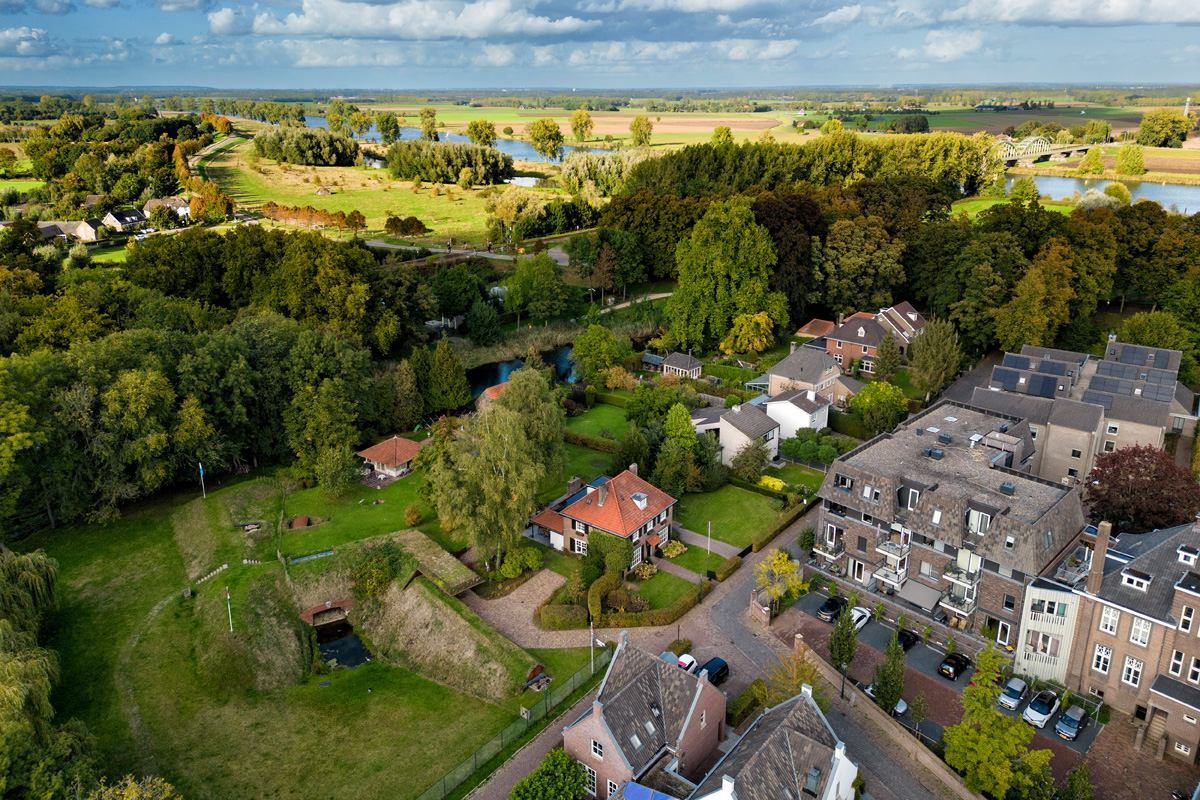
FORTE CULTURA Stop: the fortified town of Ravenstein (NL)
The Fortified Town of Ravenstein: Ramparts, Freedom and the Legacy of the Meuse
The fortified town of Ravenstein was founded in the 14th century, when Walraven van Valkenburg, as a vassal of the Duke of Brabant, decided to levy customs duties in order to generate additional revenue. To this end, he built a castle on the River Meuse. A settlement quickly sprang up around this castle, leading to Ravenstein being officially granted town privileges at the end of the 14th century.
Owing to its location, Ravenstein was an important military stronghold at that time. The fortified town was situated in the border region between Brabant, Gelre and Kleve. For a long time, therefore, the fortified town belonged to the Duchy of Kleve. The duchies of Gelre and Brabant were rivals. This made Ravenstein a strategically important location from which troops could be mobilised.
It was not until 1814 that Ravenstein finally became part of the Kingdom of the Netherlands. No longer a fortress and without a castle, but a bustling area centred on its burgeoning industry and agriculture. Houses in the „Bossche School“ style from this period can still be seen today. Ravenstein is a unique fortified town steeped in history, situated within the Zuiderwaterlinie.
Would you like to immerse yourself in the history of the area? Pop into „Toerisme Ravenstein“ and pick up some leaflets.

Discover the fortified town Get to know Ravenstein:

Ravenstein was a fortified town. It was later incorporated into the Zuiderwaterlinie defence line.
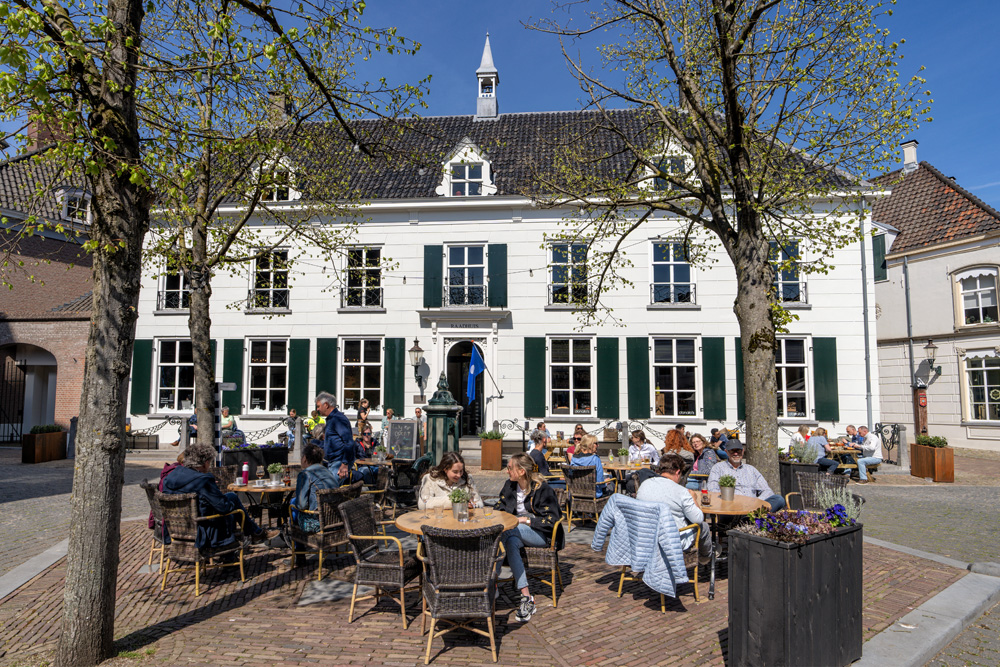
Ravenstein Town Hall
Johan Frans van Willigen, a tax lawyer specialising in criminal cases, acquired three old houses in 1726. He had these three houses joined together to form what is now the town hall. The building served as a private residence until the middle of the last century. Today, Ravenstein Town Hall is used, amongst other things, for wedding ceremonies, official receptions and as a tourist information centre.
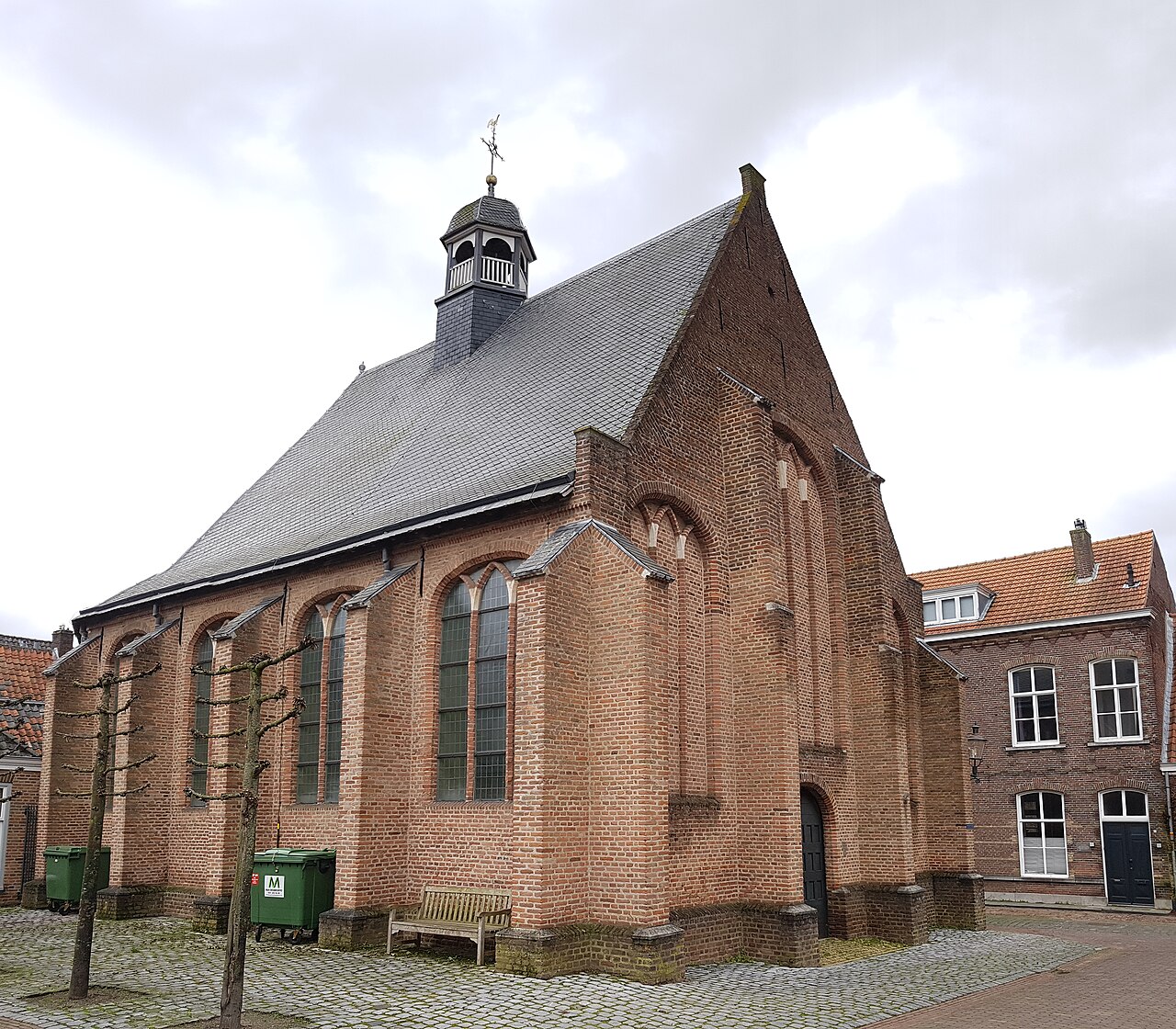
Ravenstein Garrison Church
The Garrison Church was built in 1641. As Ravenstein did not form part of the Republic at that time, there was freedom of religion there. This made the territory of Ravenstein a place of refuge for religious orders from the Republic.
Catholics attended Mass in the Ravenstein area and then returned home. Today, the church is also known as the Dutch Reformed Church and is one of the Protestant churches.
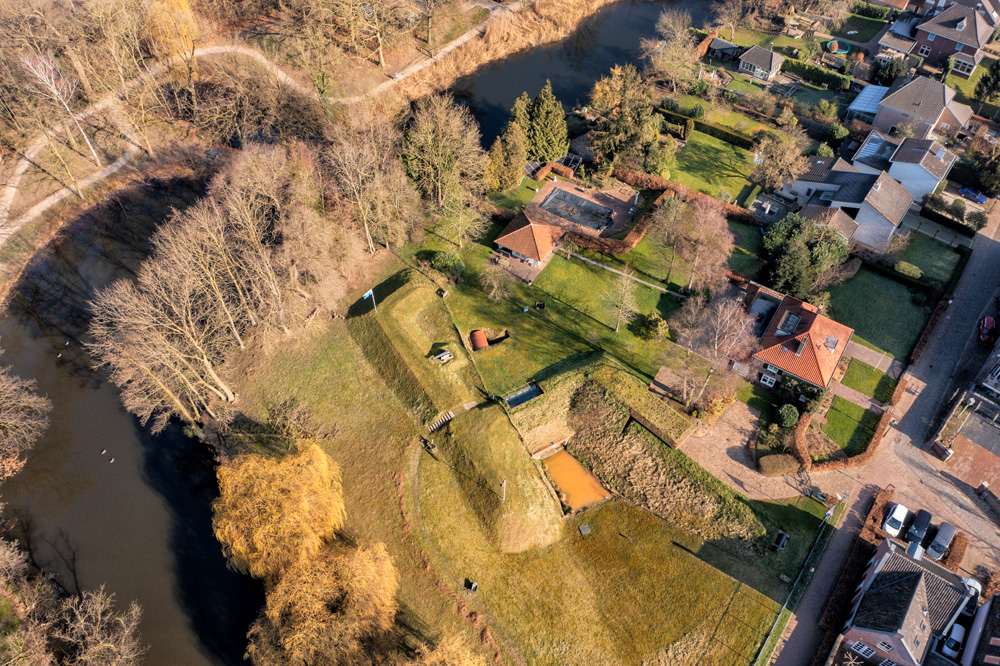
Philips van Kleef Bastion
The Philips-von-Kleef bastion is a remnant of Ravenstein’s old fortifications. The bastion was built in the 16th century to better defend the town against attacks from outside. From the fortress, the soldiers had a good view of the surrounding area and the River Meuse.
Today, it is a special place where visitors can learn about Ravenstein’s military history and enjoy the view of the surrounding countryside.
A stroll through the fortified town of Ravenstein
You can pick up various walking routes from the tourist information centre. The 1.5-hour poetry walk is particularly recommended. During this walk, you’ll be given information about the surrounding area and, at various points along the route, a poem.
The starting and finishing point is the town pump on the market square in Ravenstein.
A day in the fortified town of Ravenstein
In the centre of Ravenstein, you’ll find picturesque houses, numerous listed buildings, fortifications and city gates. The historic centre is therefore the perfect place for a lovely afternoon stroll. Be sure to pop into the Tannery Museum. The leather industry in Ravenstein has a rich history, which you can learn all about at the museum. And can you see the mill on the hill? It’s home to the Wilskracht brewery.
The Architecture of the Fortified Town of Ravenstein
The fortifications at Ravenstein form a complex, multi-layered system in which later earthworks often covered older defences, thereby preserving them for posterity. Here are further details on the specific defensive structures:
The „invisible“ heritage: The Philips van Kleefbolwerck (1509)
This bastion is regarded as one of the most significant archaeological discoveries in the history of Dutch fortifications.
- Architecture: It was in the Old Italian style (Italian route) was built to counter the threat of heavy artillery. It consists of solid stone chambers which were covered with earth to absorb the impact of cannon fire.
- Elements: The facility comprises two Air-raid shelter, two Casemates and a large, central oval common room. The casemates enabled the defenders to fire across the moat from the sides, thereby eliminating „blind spots“ for attackers.
- Conservation: The reason this structure remains almost undamaged today is that, in 1621, it was simply filled in with earth during the construction of the larger Famars bastion.
The outer works: Hoornwerken and Ravelijnen
To keep the besiegers at bay, Ravenstein had a sophisticated system of forward defence posts:
- Hoornwerken (Hornwerke): Ravenstein has two of these rectangular structures. The Upper Hornwork In the south-west, it is the only one in the Netherlands that, over the centuries, remained undeveloped It served to increase the distance between the town and the enemy besiegers.
- Ravelijn ‚t Polleke: This 17th-century earthwork fortification was only recently (2022/2023) extensively restored. As part of this work, a solid embankment was replaced by a Wooden bridge was replaced in order to restore the area’s original island character and improve the flow of water through the moat. This Ravelijn is also home to a historic Protestant cemetery.
- Ravelijn Halve Maan: Today, the Landpoortstraat, the main access road to the city centre, runs past this building.
Flank defence: The rondelle
At the strategically important corners of the city wall, in the 14th century Rondele were built, which were later incorporated into the dyke system:
- Book section: It is situated on the corner of Walstraat and Maasdijk and was originally a tower on which cannons were later mounted. A navigable tributary of the Meuse, the „Strang“, used to flow beneath the Rondeel.
- Kasteelrondeel: For centuries, this heavy masonry lay hidden just one metre below the surface of the dyke; it was rediscovered and reconstructed in 1997 during dyke reinforcement works.
The city gates as the last remaining vestiges
Two gates from the town’s first fortifications (1380) have survived and are among the town’s oldest structures:
- Kasteelsepoort: Originally part of the outer bailey, it provided access to the castle, which no longer exists today.
- Maaspoort: It secured access from the river and formed part of the first city wall.
Today, these facilities are part of the Zuiderwaterlinie integrated into a 160-kilometre-long defensive line linking Ravenstein with other fortified towns such as Grave and Bergen op Zoom.
Around the fortified town of Ravenstein, you can enjoy a varied natural landscape along the Meuse. A special spot is „Waterfront Ravenstein“, where historic fortifications meet the green riverbanks and offer a magnificent view across the river. The surrounding area features walking and cycling trails through the Meuse landscape and along the old fortifications.
events
Take a look at the events in Ravenstein.

Partner

The Zuiderwaterlinie is regarded as the oldest, longest and most frequently used water defence line in the Netherlands: a unique chain of historic fortified towns, fortresses, redoubts, dykes and floodplains that defended the country for centuries with the help of water. Zuiderwaterlinie Alliance is an important partner of FORTE CULTURA, and selected fortresses of the Zuiderwaterlinie form part of our European Cultural Route.
Wenn du dies siehst, nachdem deine Seite vollständig geladen wurde, fehlen leafletJS-Dateien.
 Deutsch
  English (UK)
  Français
  Italiano
  Polski
  Español
Schreibe einen Kommentar