

FORTE CULTURA Station: Rosenberg Fortress, Kronach (DE)
Rosenberg Fortress - the magnificent crown of the Lucas Cranach town of Kronach
Discover fortress history and modernity in the city of transformation
The mighty Rosenberg Fortress in Kronach is a jewel of Franconian fortress architecture. It is one of the largest completely preserved medieval fortifications in Europe and rises steeply above the charming old town of Kronach. The Bamberg prince-bishops developed the once medieval castle into one of their state fortresses and magnificent residences. Eventually, it was expanded into the modern fortress complex that has survived to this day.
Discover with FORTE CULTURA a variety of cultural highlights and the exciting tourist attractions of Rosenberg Fortress - one of the most beautiful and mightiest fortifications in Germany - with its Franconian Gallery and much more.

Discover Rosenberg Fortress in Kronach know:

Rosenberg Fortress in Kronach is a Single Fortress.
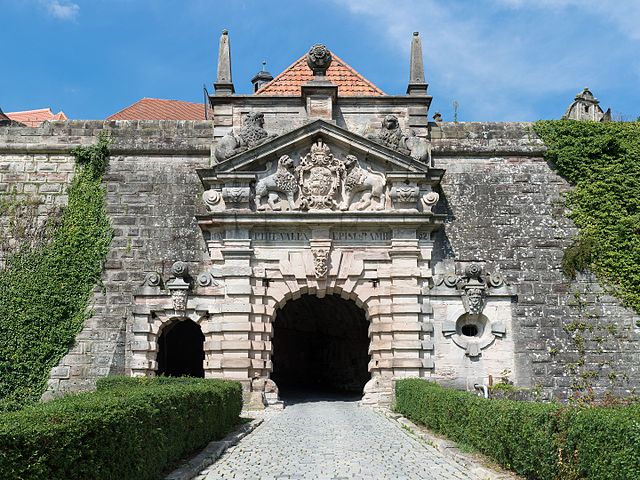
The early Baroque fortress gate
Anyone wishing to visit Rosenberg Fortress first comes face to face with the impressive early Baroque fortress gate, which, with its opulent decorative elements, ranks amongst the finest fortress gates in Germany. It was designed by Antonio Petrini, a Franconian architect of Italian descent, who also worked on the Petersberg Citadel in Erfurt (Peterstor) and the Mainz Citadel.
Nestled between the two imposing bastions of St Kunigunde and St Heinrich, it was also extremely well fortified. The defences included a drawbridge, two massive wooden gates – one of which was reinforced with iron to protect against fire – a portcullis, as well as machicolations and loopholes. The clever design of the gate passage, which featured a bend, prevented direct shots through the structure.
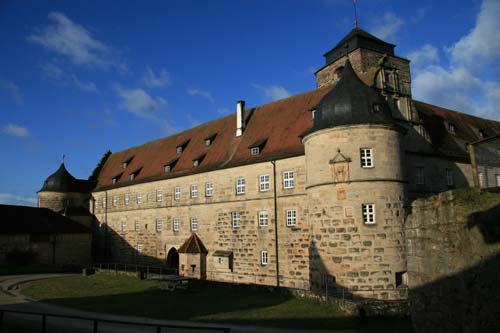
The Main Castle
The exterior design of the four-sided inner castle was altered between 1730 and 1733 by the Baroque architect Baltasar Neumann. The keep dates back to the 13th century, whilst the remaining buildings date from the 14th and 15th centuries. The only access to the inner castle was via the Spitaltor in the Fürstenbau, the east wing of the complex.
Today, the site is home to the Kronach Fortress Hostel, a youth hostel which offers its guests accommodation, food and drink within historic walls, as well as an exciting range of sports and leisure activities.
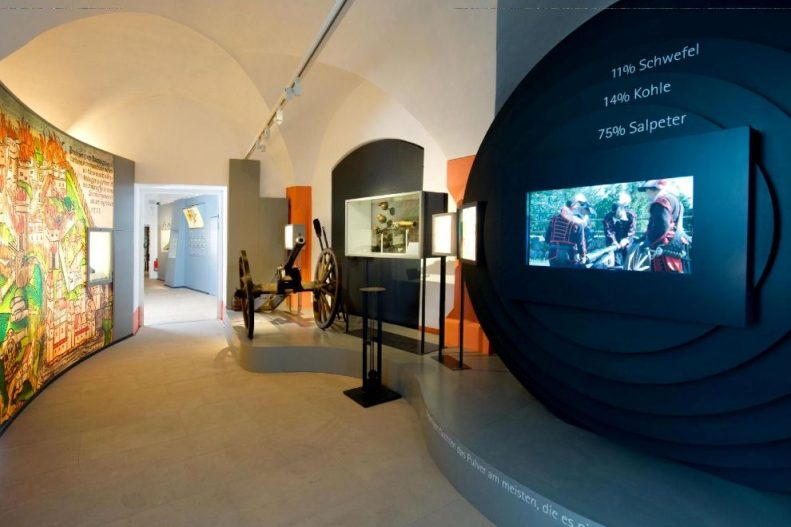
The Commandant’s House
The south wing of the main castle originally housed the castle chapel, but was converted into a Baroque barracks building in the 18th century. Today, the stately rooms of the Franconian Gallery to experience works by Lucas Cranach, Hans von Kulmbach and Tilmann Riemenschneider.
As a branch of the Bavarian National Museum, the Fränkische Galerie provides interactive and engaging information on the history of Franconia’s fortifications and the masters of the Late Gothic and Early Renaissance periods.
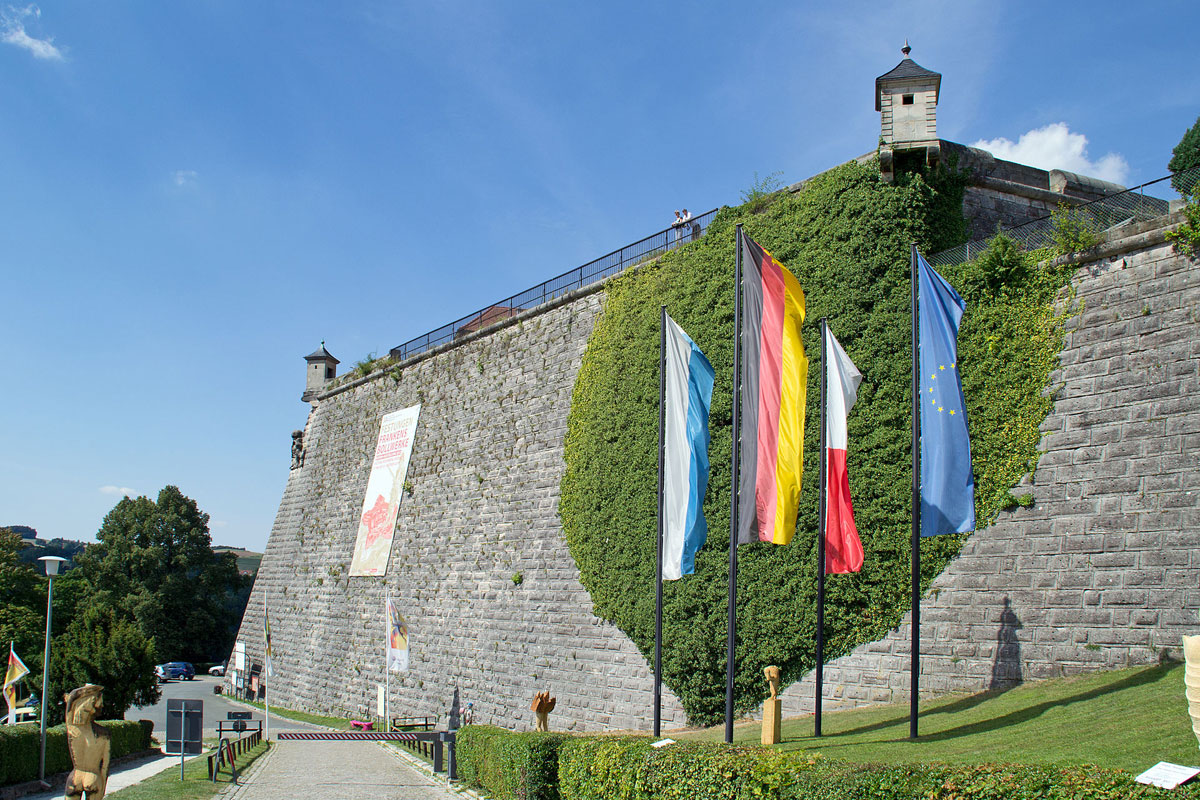
The Outer Bering
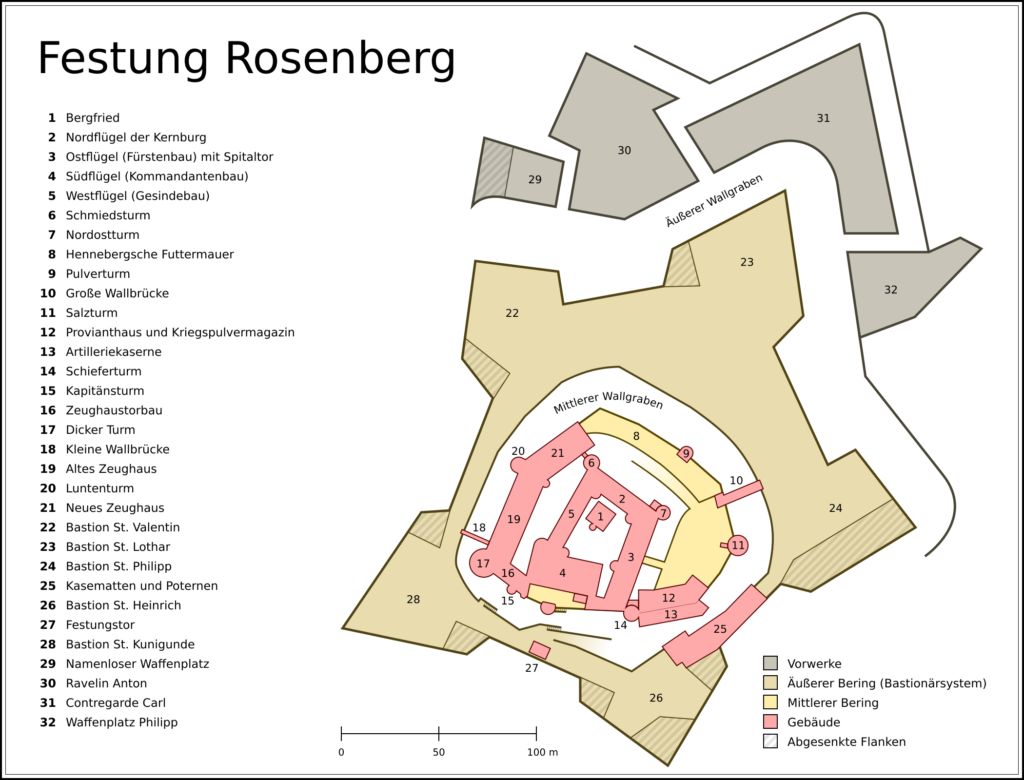
The five bastions – St Kunigunde (I), St Valentin (II), St Lothar (III), St Philipp (IV) and St Heinrich (V) – form the imposing outer ring of the mid-17th-century fortification system. Each bastion is fitted with a bay-windowed sentry box. The southern bastions are named after the Frankish Emperor Henry II and his wife, whilst the three northern bastions are named after the prince-bishops involved in their construction. In summer, the St. Heinrich bastion serves as the venue for the Rosenberg Festival.
The Middle Bering
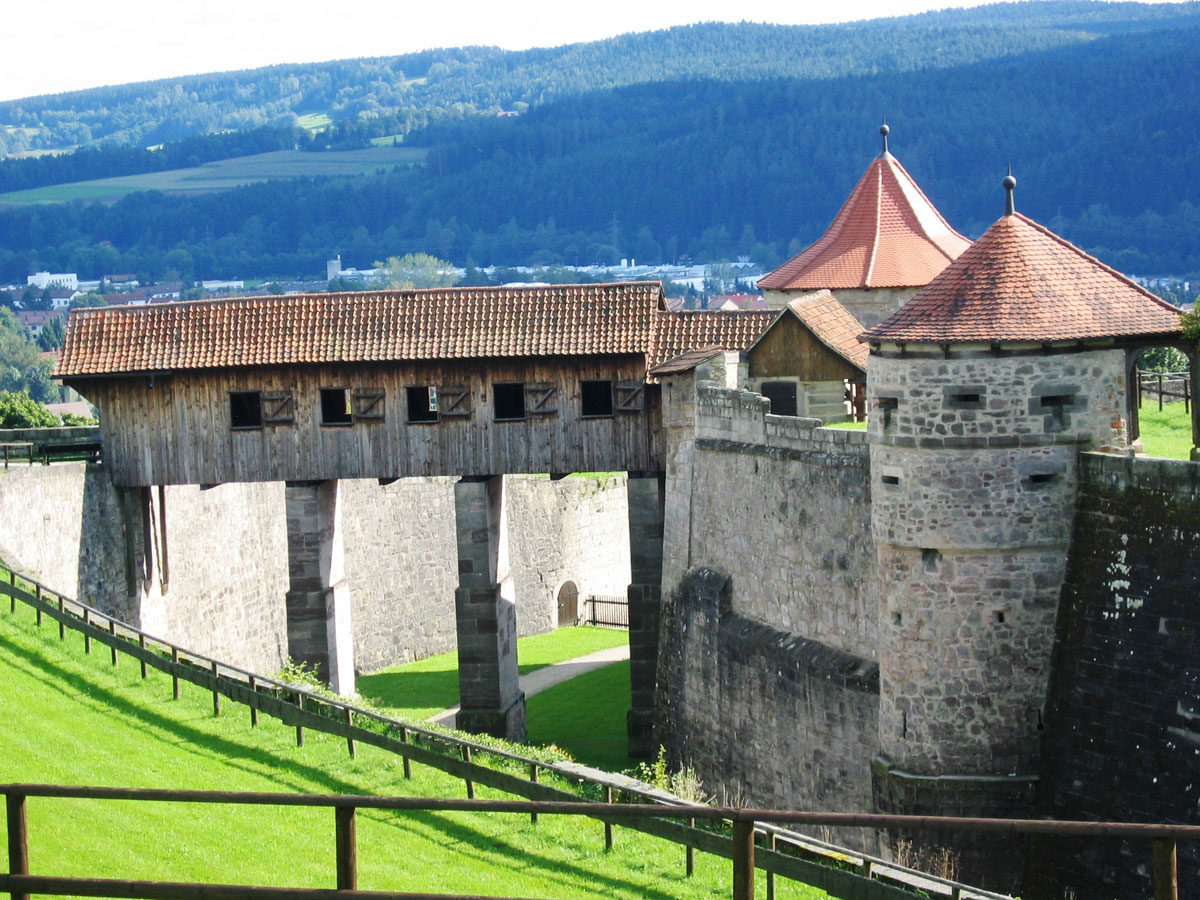
The complex of buildings forming the middle fortification ring – comprising the Armoury Gate, the Old and New Armouries, the Provisions Store, the Gunpowder Magazine and a defensive wall with a total of seven towers – dates mainly from the late 15th century. At the beginning of the 18th century, an artillery barracks was also built. The Great Rampart Bridge connects the middle ring of fortifications with the outer, bastioned ring.
The outworks of Rosenberg Fortress
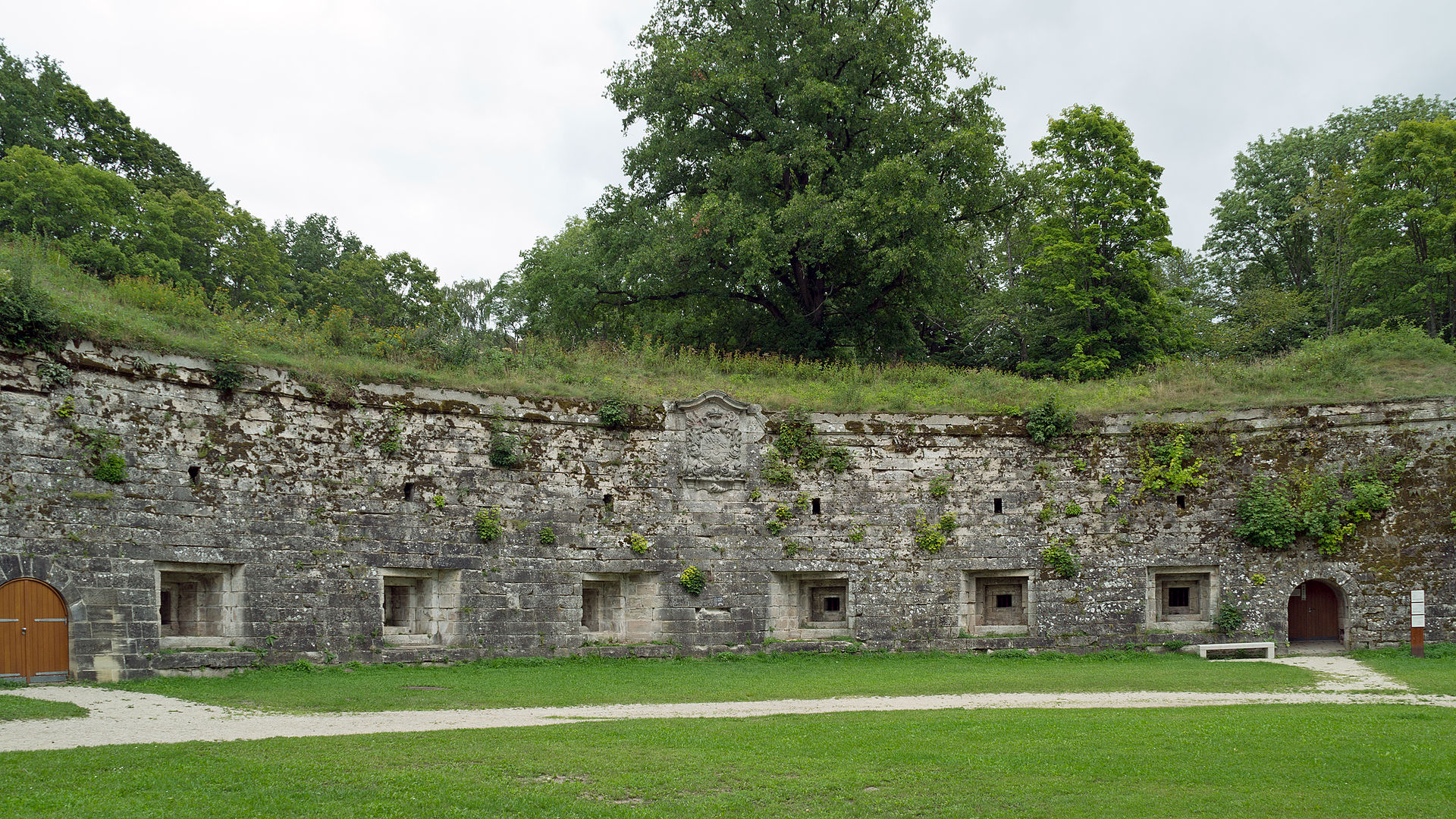
The outer works of Rosenberg Fortress face north-east and consist of an unnamed parade ground, the Anton Ravelin, the Carl Contregarde and the Philipp parade ground.
The site of the casemate-fortified outworks is now a regular venue for spectacular events, including the historical spectacle „Crana Historica – Festival of History“.
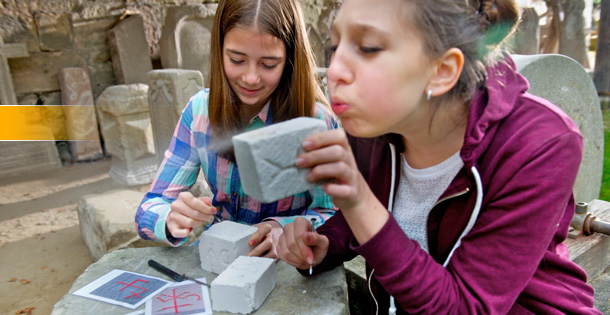
Discover Kronach’s sandstone art and get creative yourself: create your own sandstone sculpture in sculptor Tobias Schreiber’s studio under professional guidance.
Kronach is looking forward to welcoming you!
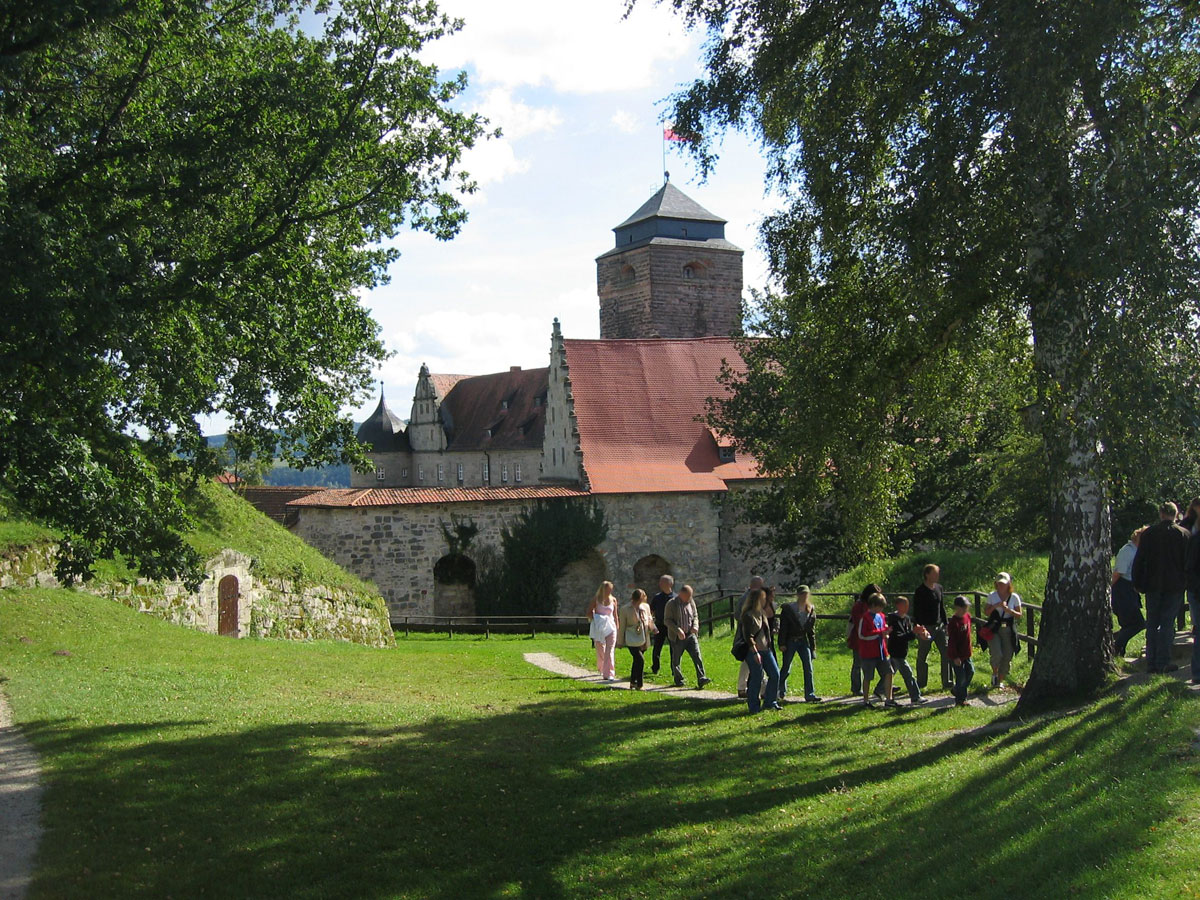
Discover Rosenberg Fortress, one of the largest and best-preserved fortress complexes in Germany: marvel at the imposing bastions, the medieval keep and the magnificent views over Kronach. We recommend wearing sturdy footwear for the outdoor tour.
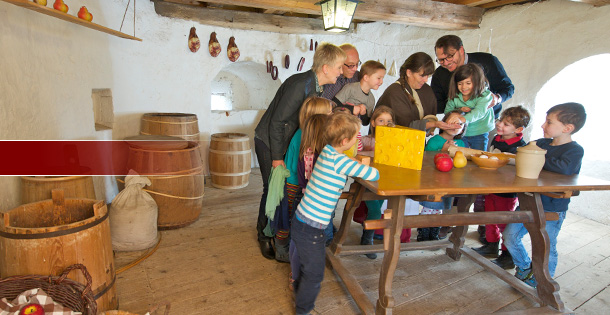
Discover life at the fortress with „Küche-Duft-Heimlichkeit“: learn fascinating facts about diet and hygiene, explore areas normally off-limits, and delve into the fortress’s underground world. A tour for children packed with hidden insights!
History of Rosenberg Fortress
Kronach, the ‘City of Three Rivers’ in the Franconian Forest, was situated on important trade routes as far back as the Bronze Age, for example the timber trade from the Franconian Forest to Amsterdam. Under the rule of the Prince-Bishops of Bamberg, a castle was built high up on the Rosenberg to protect the town and serve as a residence. Expanded from the 15th century onwards into a mighty regional fortress, it was never conquered or captured by enemies.
The Swedes, too, were repelled on several occasions during the Thirty Years„ War. Every year on “Swedish Sunday„, a procession to Rosenberg Fortress commemorates the “brave women of Kronach„, who, according to tradition, played a decisive role in this victory. A quote from a besieger, according to legend: “The men of Kronach fight like devils, but their women are nine times worse!’.
During the Reformation, Rosenberg Fortress became a bastion of Catholicism against its Protestant neighbours. Under the banner of the Holy Cross, the warring factions armed themselves and used their fortresses to protect and preserve their possessions and spheres of influence.
Kronach and Rosenberg Fortress are also associated with major historical figures, such as the town’s most famous son, the painter Lucas Cranach the Elder. He had a decisive influence on Renaissance art and on the region. This is impressively demonstrated by the Franconian Gallery in the Commandant’s Building at Rosenberg Fortress.
Napoleon Bonaparte also stopped off in Kronach. It was from here that he issued the order to attack Prussia in 1806. During the First World War, Captain Charles de Gaulle was interned at the fortress. He escaped over the high fortress walls on two occasions.
Architecture
Rosenberg Fortress holds a prominent place in the history of German fortification architecture due to its medieval features, princely splendour and the defensive architecture of the Renaissance and Baroque periods, all of which coexist here. The stone bastions are impressive for their rugged, humped ashlar masonry and their immense height.
A massive moat separates the keep and the inner fortress, with its seven defensive towers, from the „outer ring“ with its five bastions. A further moat runs around the fortress complex. The northern bastions are flanked by the outer works. The fortress’s present layout is a pentagon in a modern bastion system, completed in 1699 under Prince-Bishop Lothar Franz von Schönborn. The Kronach-based architect and fortress engineer Johann Maximilian von Welsch He worked here just as his colleague Balthasar Neumann did.


A large fortress park, including the Kronach Fortress Forest with its nature trail, a variety of walking routes and Nordic walking trails, also make Rosenberg Fortress a special nature experience. Exploring the Southern Franconian Forest on carriage rides, a hike to the summer toboggan run or rafting trips on the „Wild“ or ‘Tame’ Rodach offer an exciting programme of activities for guests of all ages.


Events at Rosenberg Fortress
Experience Rosenberg Fortress in Kronach as a unique venue for events: every year, the Rosenberg Festival featuring open-air theatre or „The Fortress Rocks“ with rousing live music. Every two years, you can also look forward to „Crana Historica“featuring a medieval market and living history.”.

Wenn du dies siehst, nachdem deine Seite vollständig geladen wurde, fehlen leafletJS-Dateien.
 Deutsch
 English (UK)
 Français
 Italiano
 Polski
 Español
 Čeština
Schreibe einen Kommentar