
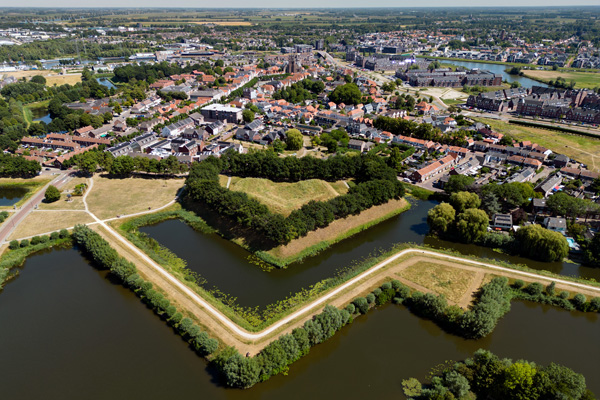
FORTE CULTURA Stop: The fortified town of Geertruidenberg (NL)
Geertruidenberg – The eternal fortress by the water
Immortally enshrined in the annals of Dutch military history
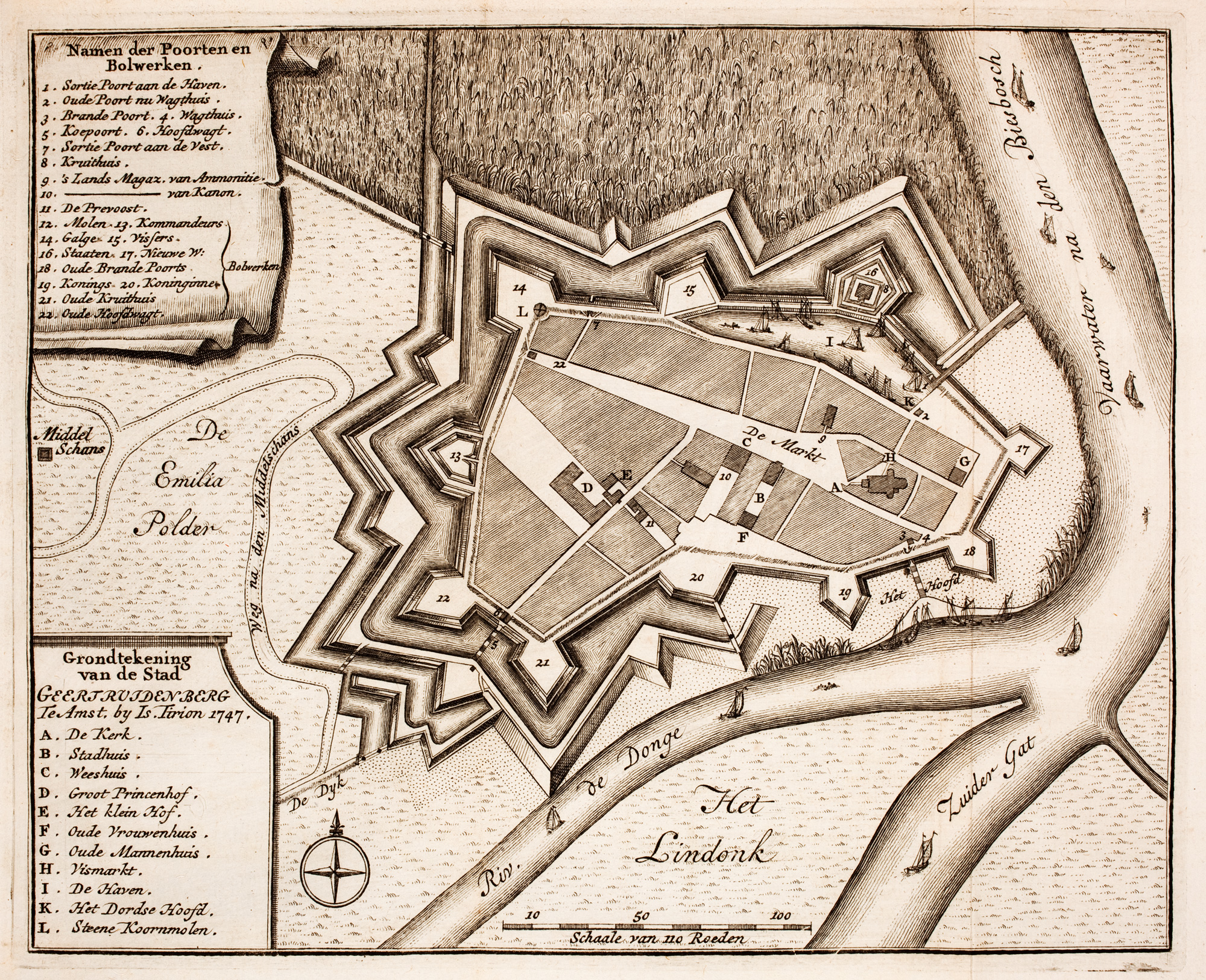
The fortified town of Geertruidenberg was granted town privileges in 1213, making it the first town in the former County of Holland to do so. Around 1250, water management in the river basin was brought under control. As a result, the „De Grote Waard“ polder region developed into an important trading area, and Geertruidenberg grew into a prosperous town situated on key waterways.
During the Eighty Years’ War, William of Orange had the first modern fortifications built, following which the town was further reinforced with bastions and moats. The fortress builder Menno van Coehoorn later made Geertruidenberg an important link in the Zuiderwaterlinie. Thanks to its strong fortifications and strategic location, the town was given the nickname „The Key to Holland“.
Today, the historic fortifications, monuments and the distinctive market square still serve as a reminder of this rich military past. At the Museum de Roos, you can learn all about the history of Geertruidenberg and the Zuiderwaterlinie.

Discover the fortified town of Geertruidenberg:

Willemstad is a Fortified town. It was later incorporated into the Zuiderwaterlinie defence line.
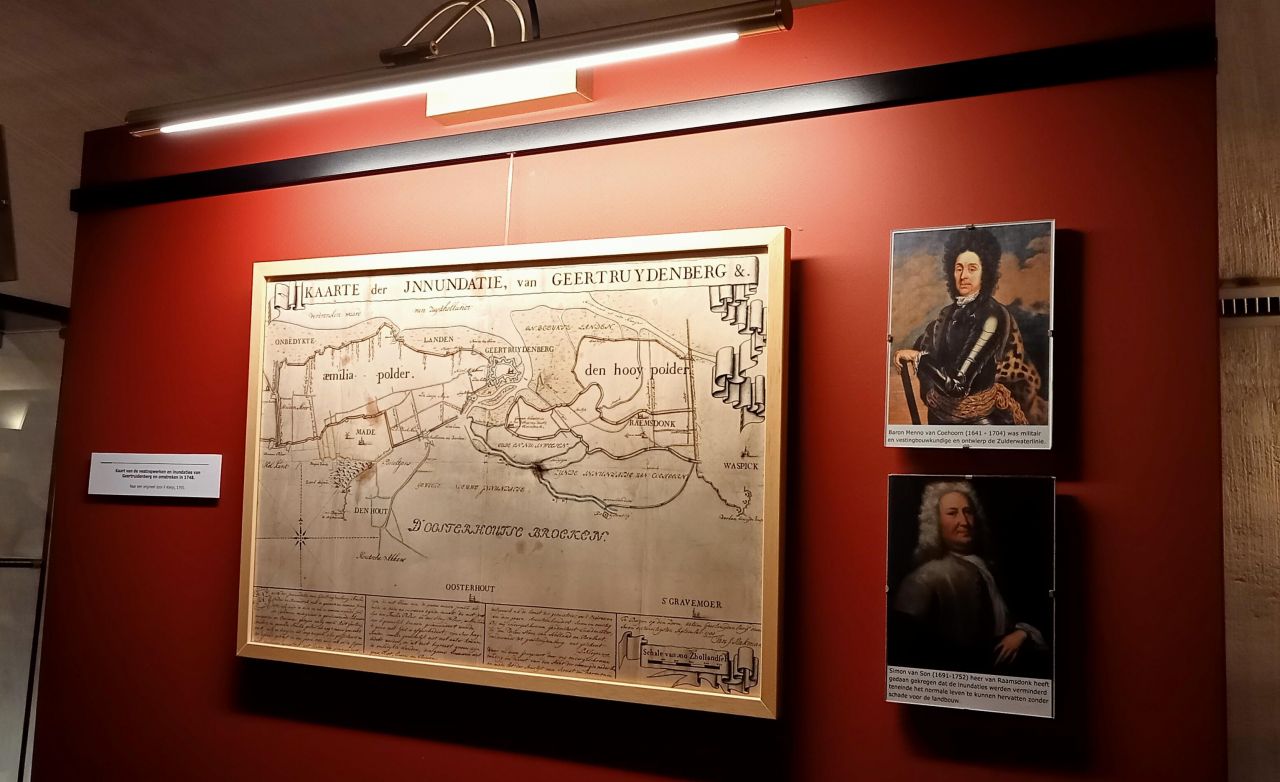
Museum de Roos
The De Roos Museum is situated in a historic building on the market square and tells the story of Geertruidenberg, the oldest town in Holland. Through engravings, models, historical artefacts and archaeological finds, visitors can learn how the (fortified) town has developed over the centuries. They can also find out about the Zuiderwaterlinie and notable figures from the town’s history.
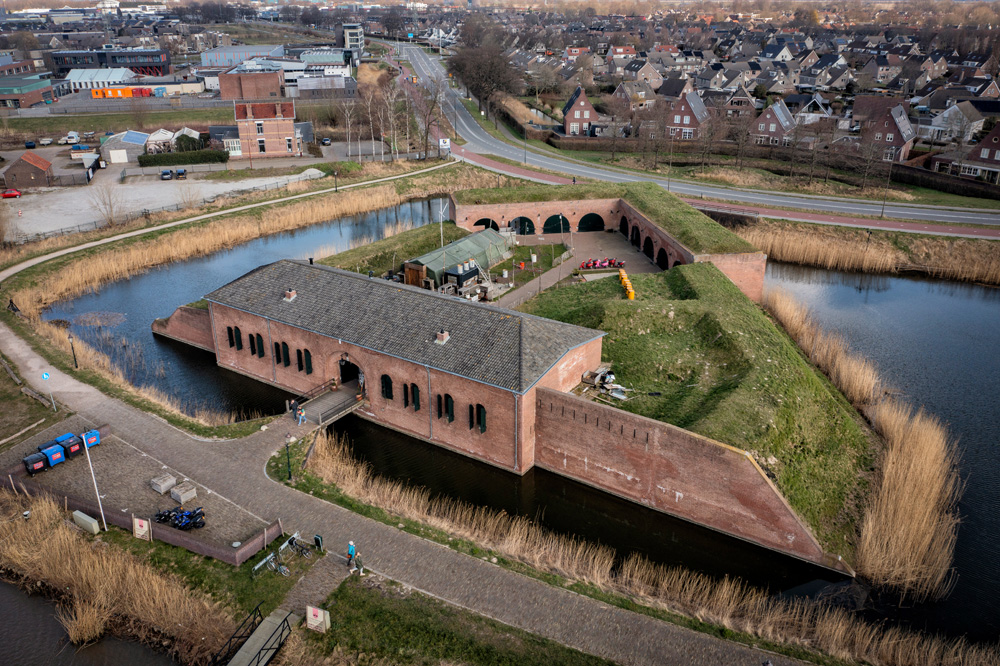
Fort Lunet on the Donge
Fort Lunet on the River Donge was built between 1837 and 1839 during the Belgian Revolt to reinforce the fortifications at Geertruidenberg. The fort guarded the River Donge and the important road linking Breda and Gorinchem, thereby playing a significant role within the Zuiderwaterlinie. After it was decommissioned as a defensive structure in 1919, it lost its military function. Today, the restored fort is a special place where visitors can experience the history of the Zuiderwaterlinie and enjoy a snack or a drink within the historic fort.
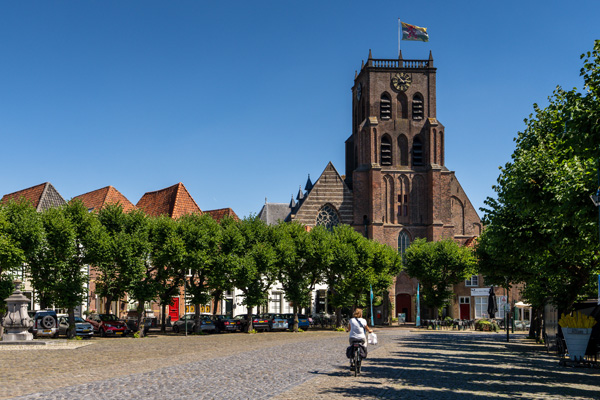
St Geertruid’s Church
St Geertruid’s Church has been the heart of the fortified town for centuries. A chapel already stood on this site around the year 660, whilst the oldest parts of the present-day church date from around 1100. Over the centuries, the church has been extended and rebuilt on several occasions, resulting in a single monument that combines various architectural styles. As a former Orange Church, the Geertruidskirche also has a special connection to the Dutch royal family. This was the church where members of the House of Orange-Nassau attended services when they were staying in Geertruidenberg.
Going for a walk
Geertruidenberg is ideal for exploring on foot. Starting from the tourist information office on the market square, there is a town walk of around three kilometres that takes you past historical highlights such as the De Roos Museum, the Commandeurshuis, the Geertruidskerk and the fortifications. In about an hour, you’ll discover the rich history of this fortified town.
Cycling
Geertruidenberg is an ideal starting point for exploring the surrounding area by bike. The ANWB cycle route „Geertruidenberg and Breda“ takes you past historic sites along the Zuiderwaterlinie, including fortifications, forts and redoubts. Along the way, you’ll experience the combination of military heritage, water and the green countryside surrounding the former defence line.
History of the Fortified Town of Geertruidenberg
Geertruidenberg, the only town in Holland to remain in Spanish hands for a long period during the Eighty Years‘ War, is a masterpiece of early modern fortification architecture and the scene of historic turning points. As a strategic stronghold at the confluence of the Dintel and the Oude Maas, the town developed into one of the Netherlands’ strongest bastions; its capture in 1593 cemented Prince Maurice of Orange’s reputation as a brilliant military strategist.
The history of the fortifications did not begin with the great sieges. As early as 1213, Geertruidenberg was granted town privileges by the Count of Holland. However, its true rise to the status of a key military stronghold did not occur until the outbreak of the Eighty Years’ War. Willem van Oranje captured the town by surprise in 1573, with the Watergeuzen (Dutch privateers) playing a decisive role. Following this initial victory, Oranje had new ramparts and three bastions built to withstand the growing threat from the Spanish army.
A dark chapter in the town’s history is the so-called „Bergverkoopery“ (sale of the fortress) of 1589. Through the bribery of poorly paid English mercenaries, the fortress fell without a fight to Alessandro Farnese, the Duke of Parma. This loss was a humiliating setback for the States General, as Geertruidenberg was the last fortress in Holland still in enemy hands. Farnese used the years he had gained to massively fortify the town and turn it into an almost impregnable fortress.
A Masterpiece of Strategy: The Siege of 1593 The recapture of Geertruidenberg in 1593 is still regarded today as a masterpiece of military engineering. Prince Maurice of Orange, a nephew of William of Orange and a learned strategist who had studied Roman military tactics, dared to launch an attack on the heavily fortified town. Maurice realised that a direct assault on the strong ramparts would have resulted in excessive casualties. Instead, he opted for an innovative approach: he completely isolated the town by deploying a fleet of warships in a semicircle around it and having them linked together with strong ropes. On land, a kilometre-long line of redoubts, ramparts and ditches was erected, stretching over two miles and encompassing an entire village. After three months of siege, on 24 June 1593, the fortress surrendered. With this conquest, Moritz cemented his reputation as one of the greatest military commanders of his time. The victory was even described by contemporary historians as the „second Alesia“, a comparison with Julius Caesar’s most famous siege.
Throughout its history, Geertruidenberg endured further sieges, including one by the French in 1793 and another by the Russians in 1813; the fortress was often abandoned without a fight or after a brief bombardment, as its strategic importance shifted. However, the siege of 1593 remains the historic high point that immortalised the town in the annals of Dutch military history.
The architecture of the fortified town of Geertruidenberg
The fortifications at Geertruidenberg are a living testament to the evolution of warfare from the 16th to the 19th century.
The bastion systems: The bastions, built by Oranje and later extended, are typical examples of Dutch fortification architecture, which utilised water as its primary defensive element. The deep moats and the ability to flood the surrounding area (inundation) made direct attacks impossible.
The St Gertrudis Armoury: One surviving relic from the later garrison period is the St Gertrudis Armoury, where weapons were stored and which also housed a garrison bakery and a dungeon.
The city walls: Although many sections of the original ramparts have been demolished over time or converted into parks, the historic course of the fortifications along the city boundary is still clearly visible.
Geertruidenberg lies on the edge of De Biesbosch National Park, making it an ideal base for nature lovers. In the surrounding area, you’ll find beautiful walking and cycling routes along the fortifications, old floodplains and characteristic Langstraat farms. The combination of water, nature and military history makes the area around Geertruidenberg a special experience that’s well worth discovering.
events
There’s plenty going on in Geertruidenberg and the surrounding area. Take a look at the events calendar to find out what’s on locally.
Partner

The Zuiderwaterlinie is regarded as the oldest, longest and most frequently used water defence line in the Netherlands: a unique chain of historic fortified towns, fortresses, redoubts, dykes and floodplains that defended the country for centuries with the help of water. Zuiderwaterlinie Alliance is an important partner of FORTE CULTURA, and selected fortresses of the Zuiderwaterlinie form part of our European Cultural Route.
Wenn du dies siehst, nachdem deine Seite vollständig geladen wurde, fehlen leafletJS-Dateien.
 Deutsch
  English (UK)
  Français
  Italiano
  Polski
  Español
Schreibe einen Kommentar