
FORTE CULTURA Station: Königstein Fortress (DE)
One of the most beautiful and powerful mountain fortresses in Europe
A single visit and view of the Elbe valley convinced Napoleon of the defence capabilities of this complex
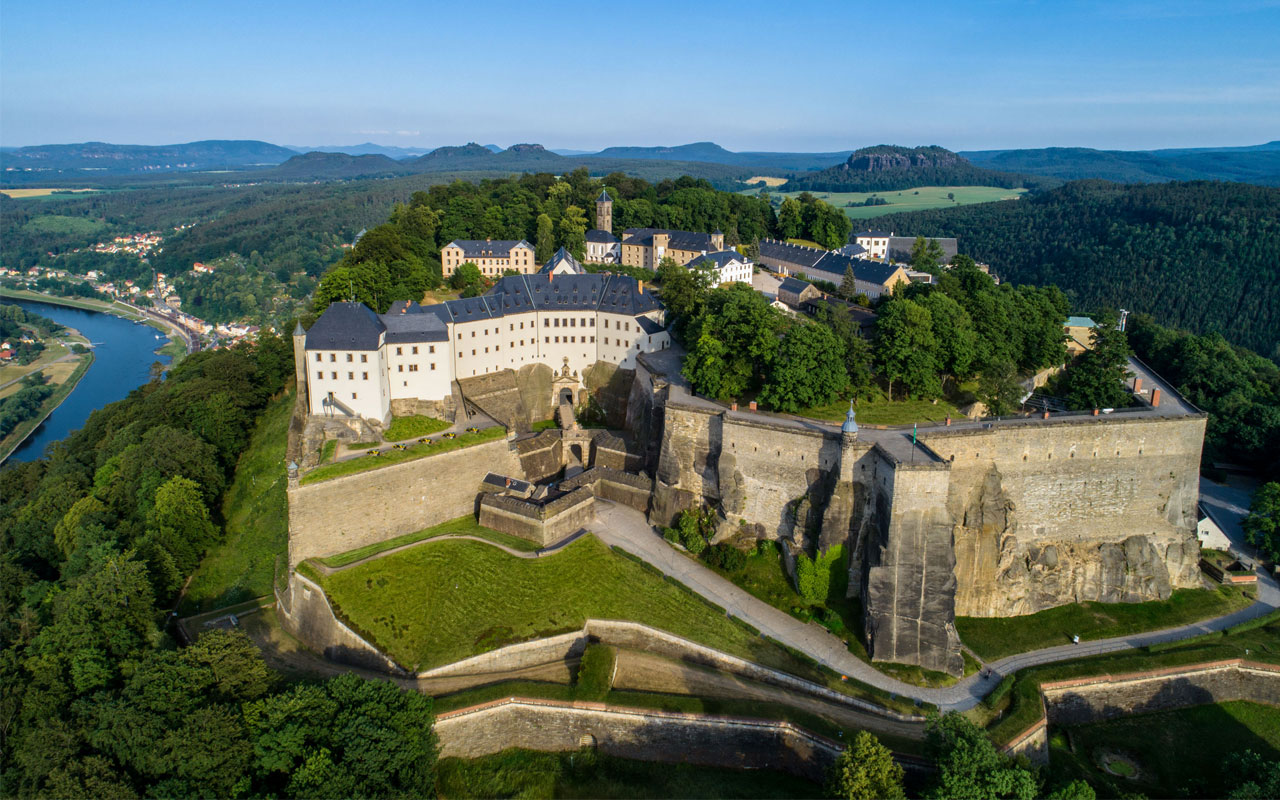
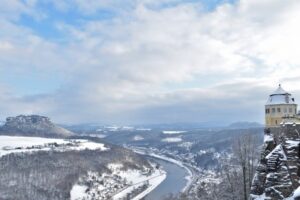
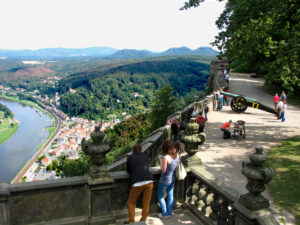
Nestled in the Elbe Sandstone Mountains, the town of Königstein lies on the banks of the River Elbe. The Königstein fortress of the same name, one of the largest and most beautiful mountain fortresses in Europe, is enthroned on the table mountain high above it. The fantastic view alone, which can be enjoyed from almost every point along the 1700 metre-long rampart walk, is worth the climb.
In addition to the panorama, the exciting architecture and history, the extremely varied and diverse adventure programme for young and old sets new standards in European fortress tourism.

Get to know thehe Königstein Fortress in Saxony know:

Königstein is a Single Fortress, built on a mountain (mountain fortress).
Gatehouse Königstein Fortress
The impressive gatehouse welcomes visitors to the fortress with artistic reliefs and fortified defences.
The upper floors now house the exciting permanent exhibition „In lapide regis - On the King's Stone“, 800 years of life at Königstein Fortress.
Commandant's house
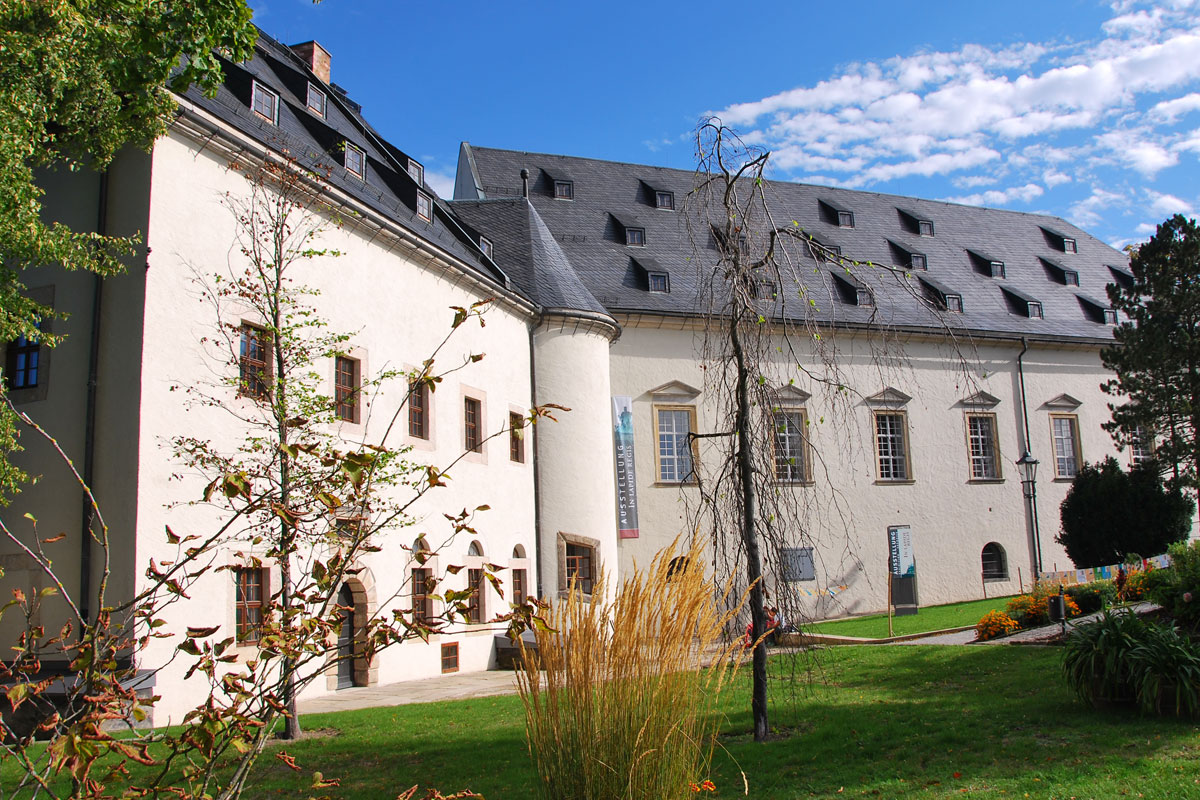
The commander's house is part of the gatehouse and served as a residence for the fortress commander and his family. It also includes the commandant's garden and the commandant's stables. The recreated furnishings of the commander's flat give a nice insight into the way of life in the early 20th century.
The interior exhibition from around 1900 consists of the kitchen, the study and the ladies' room of the fortress commander's family.
Magdalena castle with giant wine barrel
The Magdalenenburg is a small Renaissance castle that was built to house the court and as a provision house. The imposing historic wine cellar once contained a giant wine barrel with a volume of almost 240,000 litres. It was the result of a competition between the Elector of Saxony and the Elector Palatine. A tour of the wine cellar is an experience in itself.
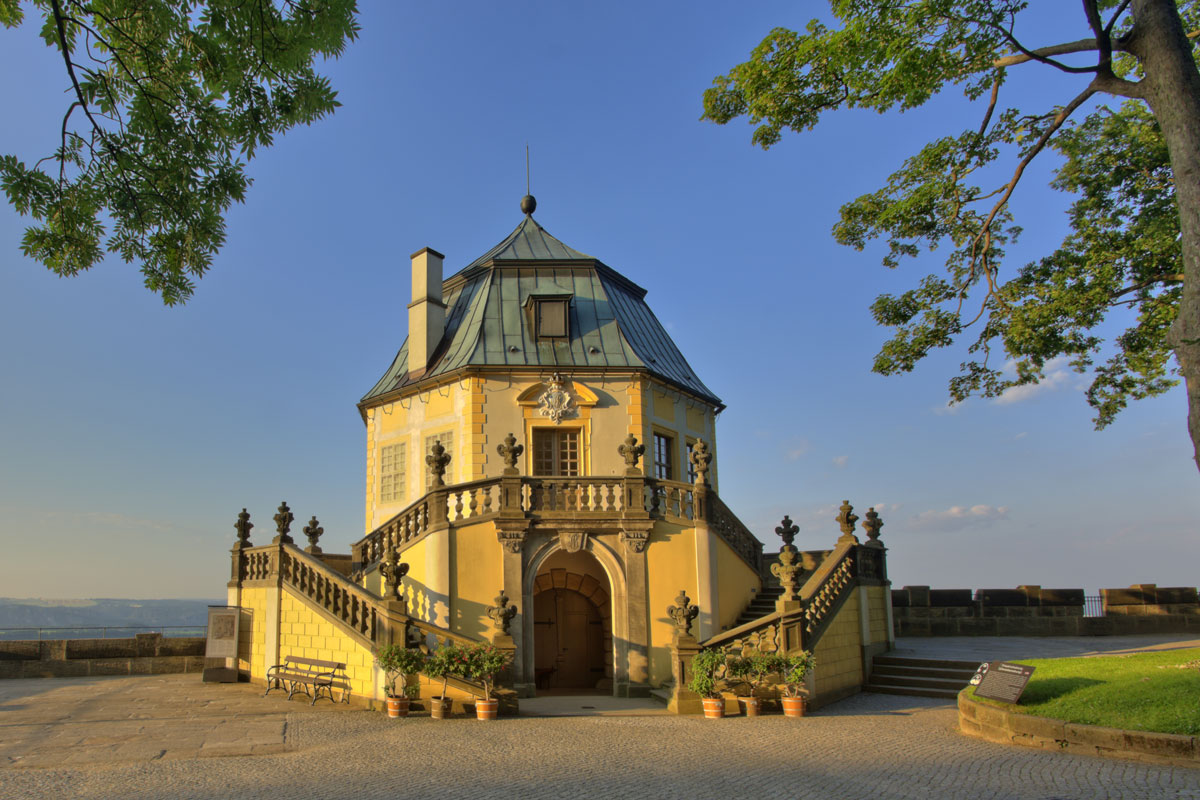
Friedrichsburg
The Friedrichsburg is a former observation and flanking tower and has one of the most beautiful views of the Elbe valley. It was converted into today's baroque pavilion in 1731. A special highlight is that the round table can be completely lowered into the basement, where it can be re-covered. It houses a registry office and can be hired for celebrations.
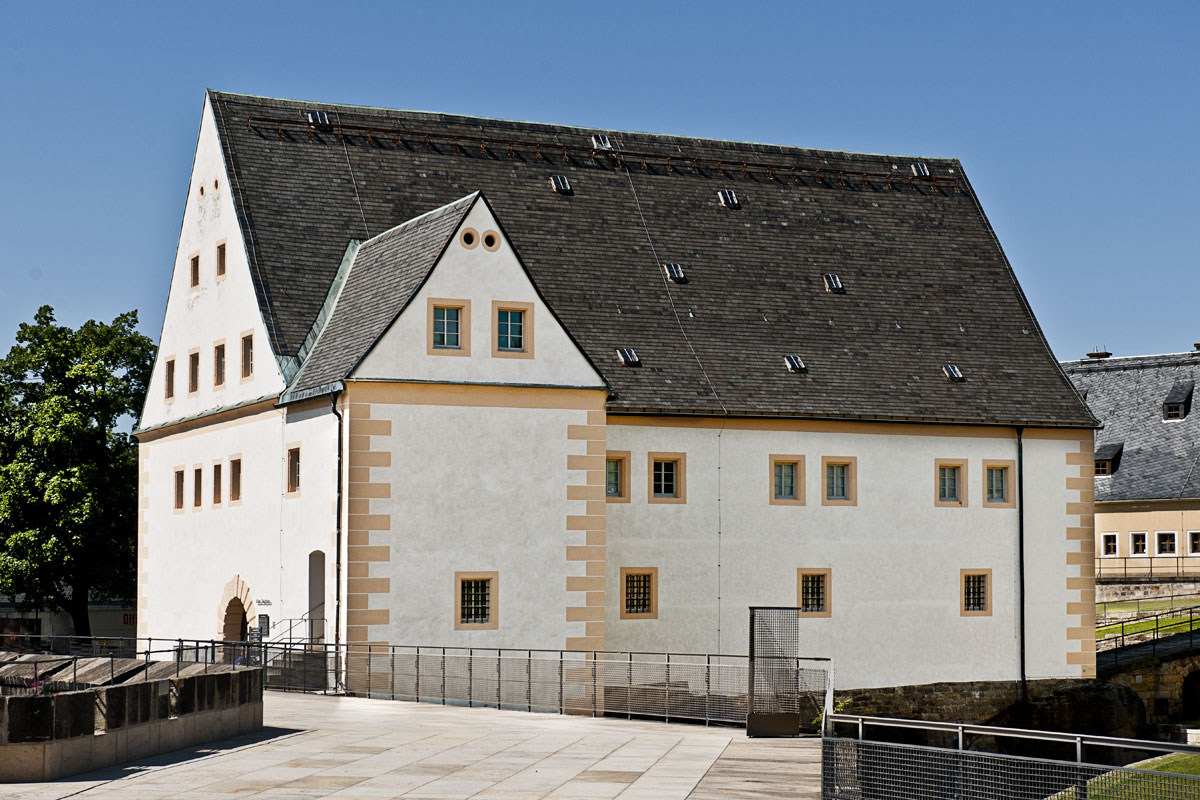
Old armoury
Cannons and mortars, blank and small arms, a bomb cart and ball pyramids: The Old Armoury at Königstein Fortress houses an important collection of military history. The building conveys an impression of the former defence capability. Königstein was considered the most secure place in Saxony, impregnable. The new exhibition provides an insight into the history of the fortress artillery, the close and long-range defence of Königstein and how the historical weapons worked.
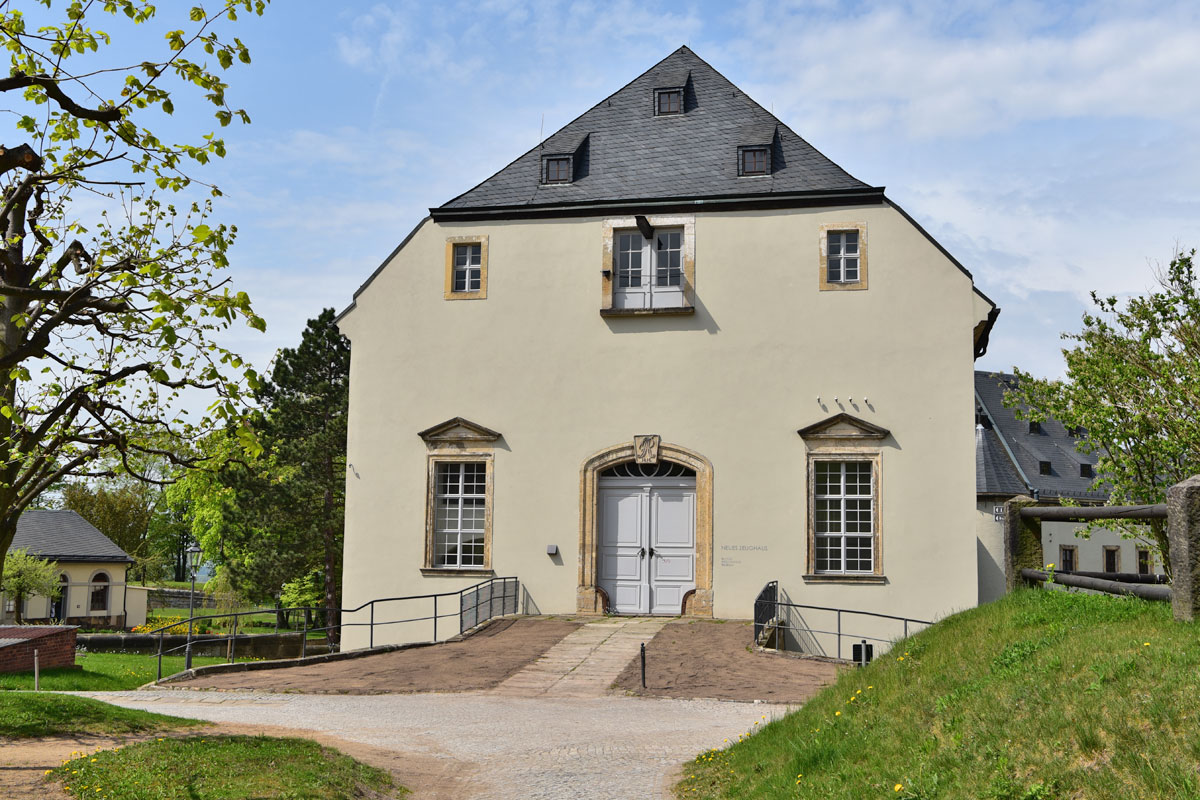
New armoury
The exhibition at the Bundeswehr Museum of Military History in the Neues Zeughaus presents a cultural history of fortified places and fortresses in twelve chapters with over 200 objects and images, showing the need for protection and the destructive potential of human ingenuity. The focus is on historical and modern weapons of attack and defence. However, the tour also addresses topics that go far beyond classic fortress warfare, from castles as a romantic projection surface and retreat to the defenceless bourgeoisie on the city wall or the barricade. In the end, the exhibition „Fascination Fortress“ also raises questions that are relevant to the present day and opens up numerous topics that invite reflection on the socio-political debate about security, protection and destruction.
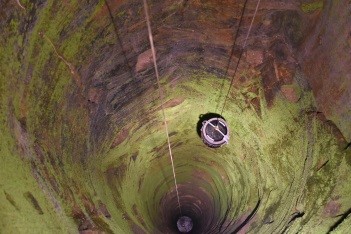
Well house
The museum rooms in the Brunnenhaus offer a new experience. 20 years after the opening of the previous exhibition in February 1998, the exhibition has been redesigned and technically modernised.
At 152.5 metres, the well at Königstein Fortress is the deepest of its kind in Saxony and the second deepest in Germany. Its sinking between 1566 and 1569 was ordered by Elector Augustus to secure the water supply for the future fortress. The traces of the miners and their chisels are still visible in the shaft today. A new 1:10 scale model shows the sinking of the well by the Marienberg miners around 450 years ago. The highlights of the exhibition are the direct view into the illuminated well shaft and the demonstration of water pumping with the old electric motor from 1911.
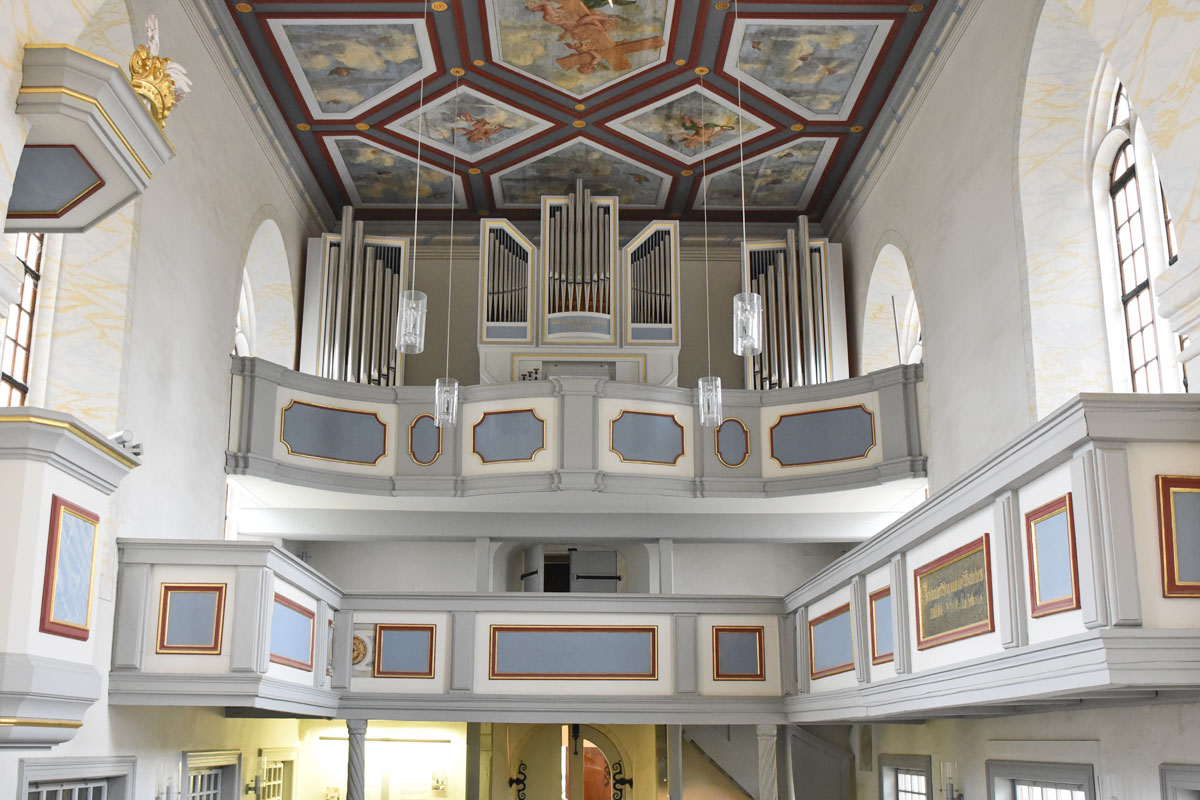
Garrison church
The church is Saxony's first garrison church (1676) and was originally a Romanesque castle chapel. It was reconsecrated in 2000 after extensive renovation. Sunday music takes place in the garrison church on selected dates. Visitors can enjoy a 15-minute concert on the Jehmlich organ every hour on the hour between 12:00 and 16:15. There are also church services at 10.30 am on certain Sundays. Current dates can be found in the Königstein Fortress events calendar.
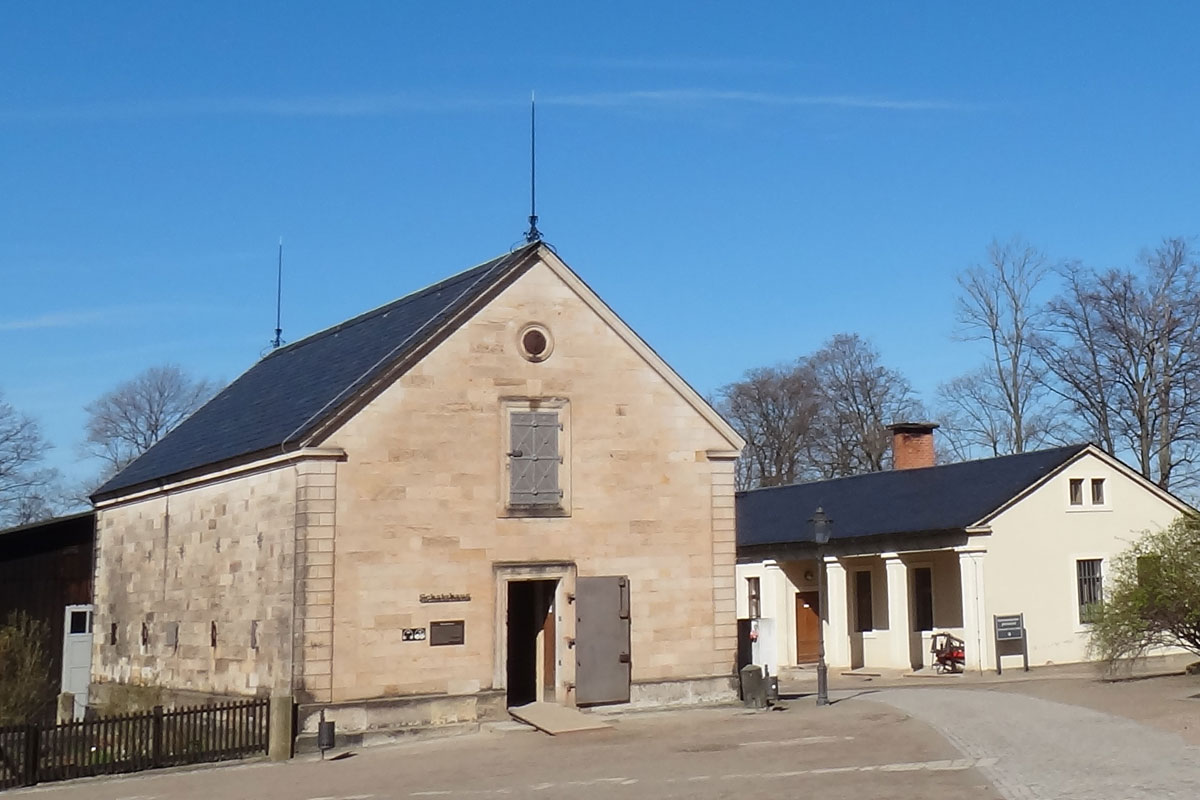
Treasure house and kitchen garden
The impressive gatehouse welcomes visitors to the fortress with artistic reliefs and fortified defences. The upper floors now house the exciting permanent exhibition „In lapide regis - On the King's Stone“, 800 years of life at Königstein Fortress. In troubled times, the building served as a storage location for the state treasury. In the 19th century, this was occasionally stored here in times of peace (up to 2 million thalers).
Next to the treasure house is a kitchen garden. It serves as an example of the self-sufficiency of the fortress inhabitants 100 years ago and shows a typical cross-section of everything that was grown for this purpose.

GDR bunker
Fortress Top Secret: Hidden in the forest at Königstein Fortress is a rock bunker against nuclear, chemical and biological attacks from the GDR era.
In the 1960s, the war powder magazine of Königstein Fortress was converted into a bunker with gas-tight fire doors, overpressure ventilation locks, a ventilation system, an emergency power generator and a water tank by the GDR civil defence. Numerous walls were built into the large room. This created enclosed areas.

As eloquent as the old nursery rhyme begins, the wide range of tourist attractions for fortress visitors of all generations is just as exhaustive. Guided tours, workshops, games, exhibitions, festivals and much more, not to mention the magnificent view, make you want to visit the fortress all year round.
Permanent exhibition In Lapide Regis - On the King's Stone
The exciting and interactive exhibition impressively conveys the varied history of „800 years of life at Königstein Fortress“. A total of 33 rooms have been prepared for this purpose, some of which have been made accessible to the public for the first time ever.
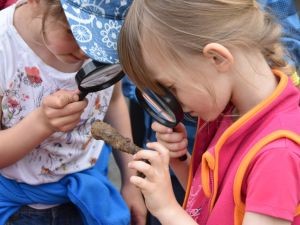
Participation programmes for children
Königstein Fortress offers a year-round, interesting and varied programme, especially for young explorers. Among them:
- „Sealing the Border Certificate“ - for little kings
- „Telling secret signs“ - for talented stonemasons
- „Searching for and excavating archaeological finds“ - for young archaeologists
and much more.
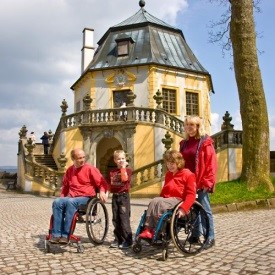
Fortress for people with disabilities
Königstein Fortress also offers people with disabilities an eventful visit. An accompanying person is recommended for wheelchair users, as there are some uneven paths and slopes due to the historical structure of the building.
A route map for wheelchair users provides a better overview of difficult or impassable paths.
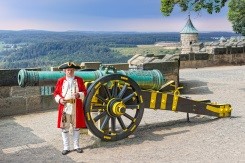
Guided tours of the fortress
Guided tours are offered several times a day from April to October. There is something for everyone: a stroll through 800 years of fortress history, gruesome stories from the fortress chronicles on a tour by lantern light at night, amusing hours with Captain Clemens, short highlight tours for families or themed tours for children and school groups (7 to 16 years).

History of Königstein Fortress, Saxony
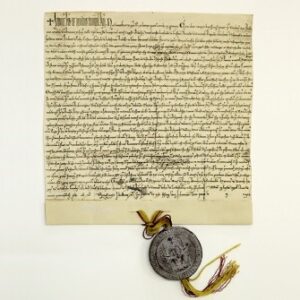
King Wentzel I of Bohemia, ruler of the Kingdom of Bohemia, first mentioned a medieval castle on the Königstein with its burgrave Gebhard vom Stein in 1233. The first complete designation of „Königstein“ in the Upper Lusatian border charter was sealed by Wenceslas I „in lapide regis“ (Latin: on the king's stone). By the Treaty of Eger in 1459, the Königstein was granted to the Duchy of Meissen and thus to the Wettin Electors.
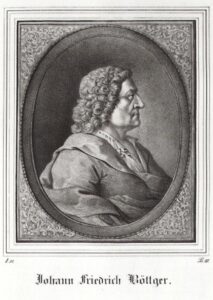
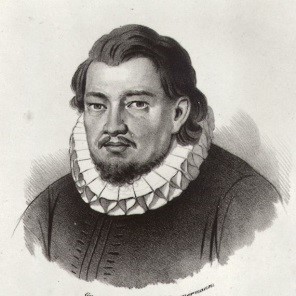
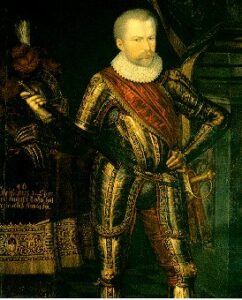
Elector Christian I finally ordered Königstein to be developed into a state fortress in 1589, after Elector August had created the conditions for this by building the fountain in 1563. The fortress was subsequently used by Saxon dukes and electors as a safe retreat, hunting and pleasure palace and also as a state prison. Chancellor Dr Nikolaus Krell, a leading Calvinist, was imprisoned as the first state prisoner in 1591 at the behest of the elector's widow, a strict Lutheran. He was followed by over 1000 other prisoners until 1922, including Böttger, Bakunin and Bebel.
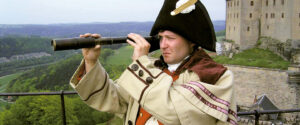
The fortress has been modernised time and again under changing managers and owners. To this day, no one has succeeded in conquering the fortress militarily. In 1806, Königstein became a Rhine Confederation fortress in the new Kingdom of Saxony. Napoleon inspected Königstein in 1813 and attested to its absolute defence capability.
In 1815, Königstein was declared the only Saxon state fortress and served as a refuge for the royal family until 1866. From 1870, the fortress was mostly used as a prisoner of war camp or military hospital, and in 1949 a youth work centre was established. The fortress on Königstein has been a museum since 1955. Today, history is brought to life here in a variety of transparent ways.
Architecture
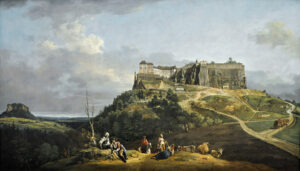
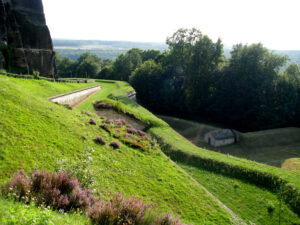
Elector Christian I of Saxony and his successor had the existing castle extended between 1589 and 1597 to become the strongest fortress in Saxony. They added high walls all around the rugged mesa and erected many of the 50 buildings that still exist today, e.g. the gatehouse, the Streichwehr, the Old Barracks, the Christiansburg and the Old Armoury. Further construction phases in the 17th and 19th centuries completed the fortifications and the ensemble of buildings. Königstein Fortress is thus an impressive ensemble of buildings from the late Gothic, Renaissance and Baroque periods right up to the 19th century.
The entire fortress covers 9.5 hectares. The ramparts of the fortress are 1700 metres long and its walls rise up to 42 metres.
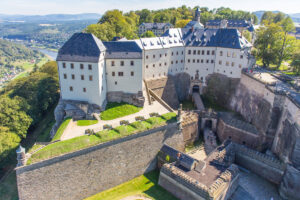
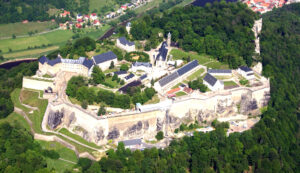
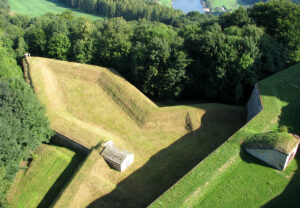
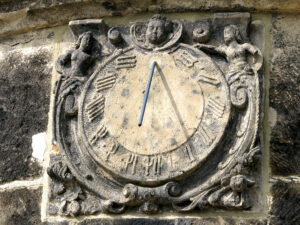
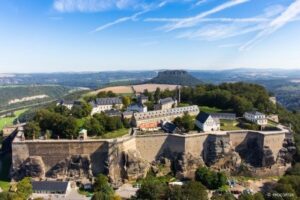
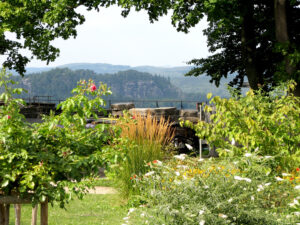
It's not just nature lovers who are attracted by the incredible views over Saxon Switzerland and the Elbe valley to Königstein Fortress. The 1700 metre-long panoramic trail along the fortress parapet offers impressive views at all times.
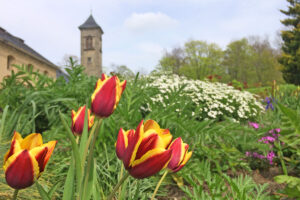
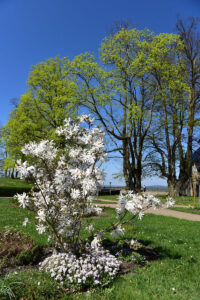
But inside the fortress there is also a lovingly designed oasis for tired hikers, for example in the garden at the commander's house. The extensive fortress grounds also offer many shady places to linger and relax.
If you want more adrenaline, you can really let off steam in the Königstein climbing forest at the foot of the fortress, opposite the car park. Königstein Fortress is also the starting point for wonderful tours to the table mountains of the Elbe Sandstone Mountains such as Lilienstein, Pfaffenstein and Bastei, as well as through the romantic valleys of Saxon Switzerland. In addition, the most traditional and attractive hiking route in Saxon Switzerland - the Malerweg - runs alongside Königstein Fortress. The surrounding area offers many experiences for young and old.
Events at Königstein Fortress, Saxony
Tourism partner of Königstein Fortress, Saxony




Wenn du dies siehst, nachdem deine Seite vollständig geladen wurde, fehlen leafletJS-Dateien.
Cultural ribbon
fortified monuments
on the Elbe river
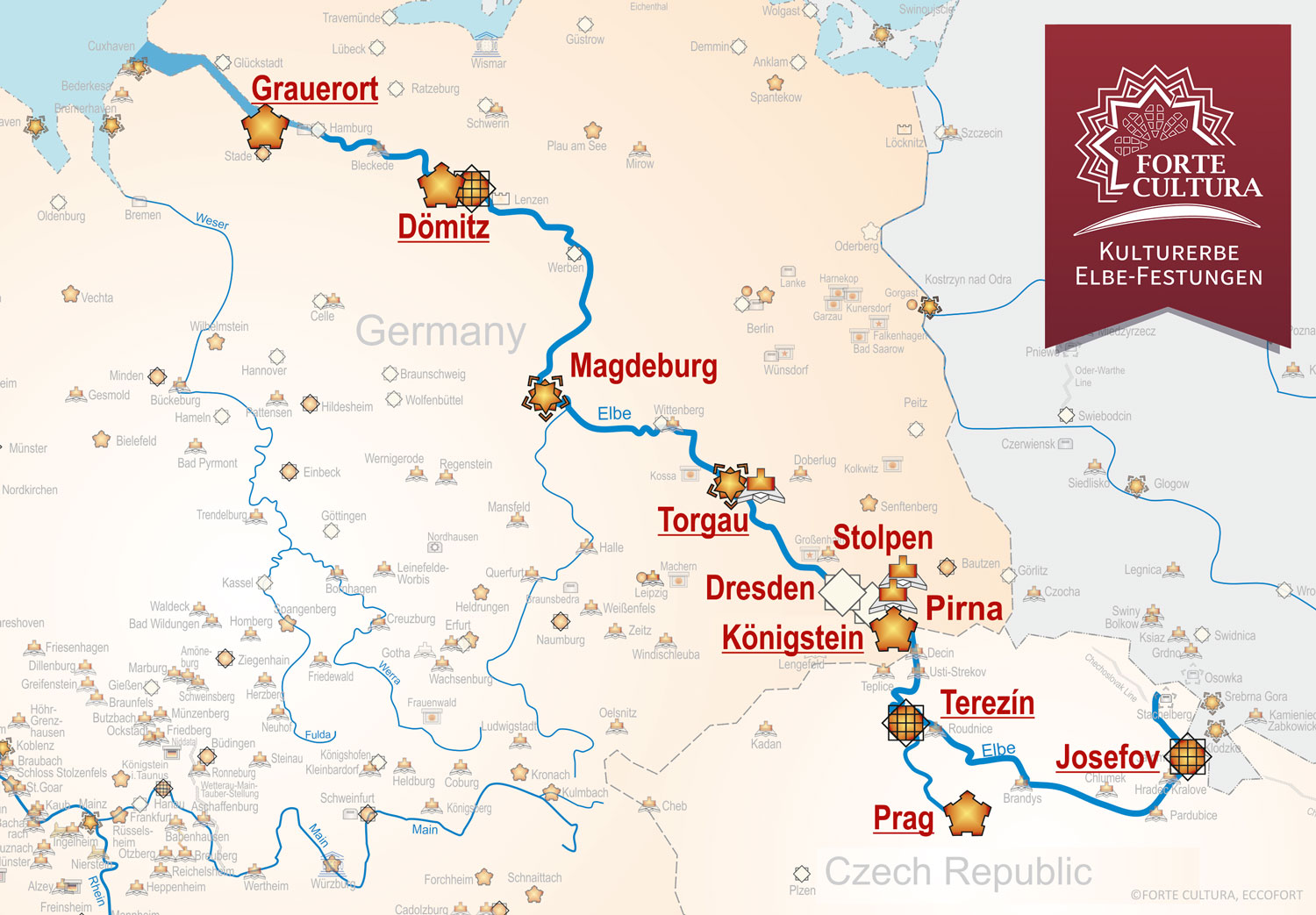
From its source in the Czech Giant Mountains to its mouth in the North Sea near Cuxhaven, the Elbe river connects 1091 kilometres of magnificent cultural landscapes.
Conquer the FORTE CULTURA Elbe fortresses and discover the region from a new perspective.
 Deutsch
  English (UK)
  Français
  Italiano
  Polski
  Español
Schreibe einen Kommentar