
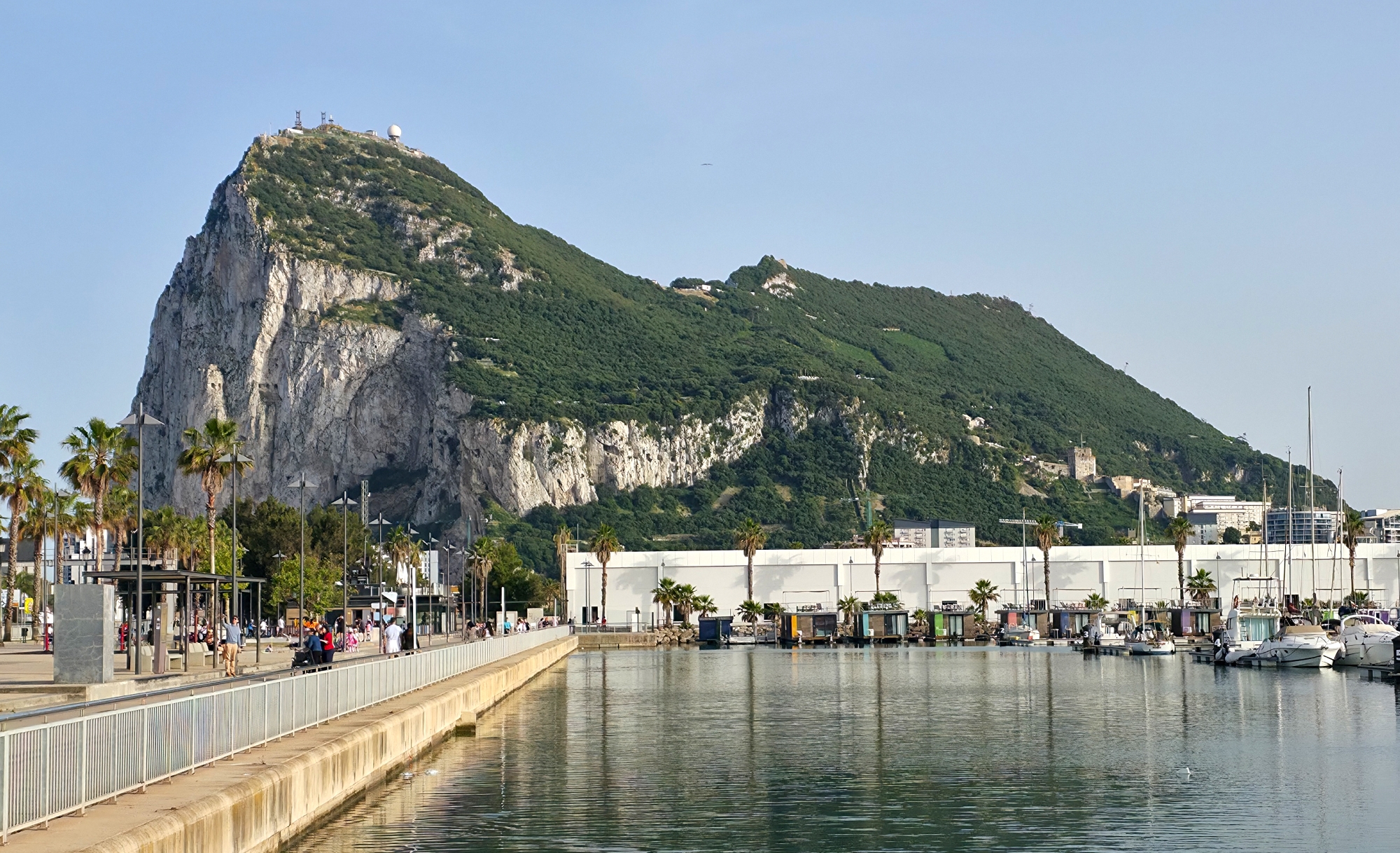
FORTE CULTURA Station: Gibraltar fortress system (GI)
Gibraltar fortress system - 1000 years of defence technology evolution
Fortress heritage from three cultures
The fortress system of Gibraltar is one of the world's most complex and densely layered defensive cultural landscapes. For over a millennium, the striking 426 metre high limestone monolith acted as a geopolitical guardian of the strait between the Atlantic and the Mediterranean. The evolution of its fortifications is a stone testimony to the constant change in military technology - from medieval siege engines to the emergence of powder artillery and the three-dimensional warfare of the 20th century. In its present form, the rock unites the architectural heritage of three great civilisations.
Discover the exciting mix of Moorish, Spanish and British influences with FORTE CULTURA.
The Moorish epoch (1068-1462) laid the foundation for the systematic fortification of the „Jebel Tarik“. Under the Almohad Sultan Abd al-Mu'min, the fortified city was built from 1160 onwards. Madīnat al-Fath, which already had a citadel, walls with towers for archers and an ingenious water reservoir. An outstanding example of the material technology of the time is the Tower of Homage, which is made of high-strength Tapia (rammed earth) and withstood even the heaviest shelling.
With the Spanish conquest in 1462, the fortress began to be adapted to the age of powder artillery. The Spanish replaced high, thin medieval walls with lower, more massive structures and angular bastions in order to better absorb shocks from cannons. A milestone of this era is the Charles V Wall, a monumental barrier wall to protect the previously vulnerable southern flank against attacks by corsairs.
The British era from 1704 marks the phase of bastion defence perfection and ground-breaking innovations. During the Great Siege (1779-1783), the British revolutionised defence tactics by building the first Great Siege Tunnels and the development of depression mounts, which made it possible to fire steeply downwards. In the 19th century, Gibraltar was developed into a global artillery platform, which was supported by technological giants such as the 100-tonne cannon reached their maximum firepower.
During the Second World War, defence technology reached its peak when the rock was transformed into an underground fortress city. A 55 kilometre-long labyrinth of tunnels and caverns provided space for up to 16,000 soldiers and housed complete hospitals, power stations and depots. Today, this fortified heritage is seen as a „military manuscript“, in which each generation has built on or added to the works of its predecessors, and is preserved as a living archive of history.

FORTE CULTURA Fortress portrait
Get to know the Gibraltar fortress system kennen.
events
Wenn du dies siehst, nachdem deine Seite vollständig geladen wurde, fehlen leafletJS-Dateien.
 Deutsch
  English (UK)
  Français
  Italiano
  Polski
  Español
Schreibe einen Kommentar