

FORTE CULTURA Site: Boyen Fort in the Gizycko Fortress System (PL)
Prussian fortress architecture in the heart of the Masurian Lake District
History at your fingertips in one of Europe's most charming landscapes
The Boyen Fortress in Gizycko (formerly Lötzen) was built in 1844 to secure the border of the province of East Prussia against a possible threat from the east and was expanded into a fortress system in the following years. The natural barrier of the Great Masurian Lakes allowed only a few convenient east-west passages. Lötzen was located at a strategically important point in the middle of the lake district and was already an important road and railway junction in the lake belt.
The Boyen Fortress was the scene of combat operations in the First and Second World Wars and had to prove its defensive capabilities many times over. Personalities such as Emperor Wilhelm II and Prince Joachim of Prussia stayed here, and the biographies of Prussian generals such as Hindenburg and Ludendorff are linked to the Boyen Fortress.
Discover the exciting history of the comparatively young fortress system in the "Land of 1000 Lakes" with FORTE CULTURA®. The Boyen Fortress and the town of Gizycko are now tourist highlights of the Masuria region and attract many regional and international visitors every year with their diverse cultural offerings.

Discover the Boyen Fortress in Gizycko know:

Lötzen (Gizycko) was a Fortress system, consisting of Boyen Fort, outer forts and defensive lines.
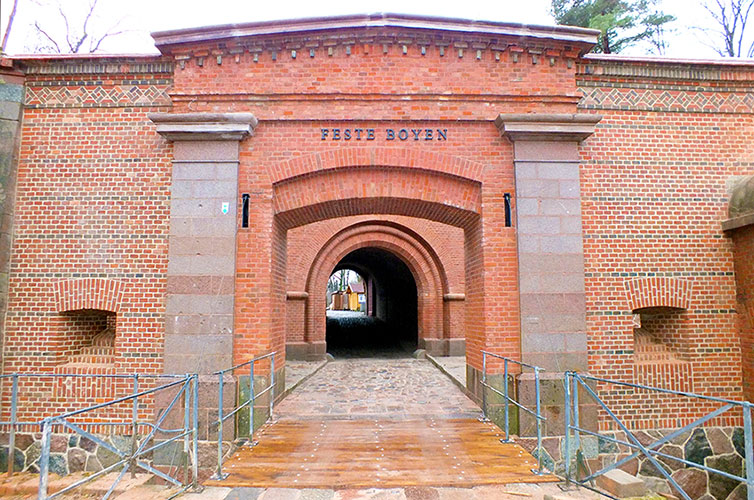
Lötzen Gate with caponier
The Lötzen Gate in the northeast forms the main entrance to the fortress from the town. With two gates in succession and a drawbridge, it was also the most heavily fortified. The U-shaped caponier in front made it possible to fire on the enemy along the moat.
Today, the caponier is home to the Tawerna Boyen, which treats its visitors to modern cuisine, either in the peaceful beer garden or in the historic fortress vault. The entrance is located between the first and second gates. Further information
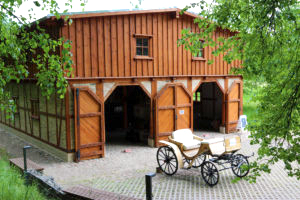
Stable with coach house in the fortress courtyard
The horse stable with carriage shed was built around 1887. The horses were mainly needed to move cannons and ammunition wagons around the fortress. The impressive building was modernised in 2015 and equipped for exhibitions.
The ground floor houses wooden carts, crockery, saddles, a carriage and a fire engine from the 19th century, a Swiss field kitchen from the early 20th century, military towing vehicles from the interwar period and a hunting vehicle from former East Prussia. The walls are adorned with photographs of Lötzen from 1915, and changing exhibitions are displayed on the upper floor. Further information
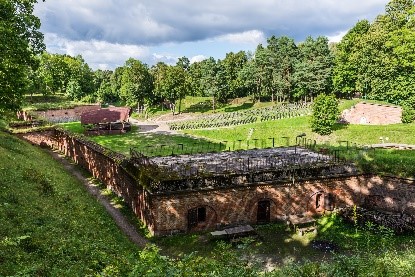
Fortress moat with amphitheatre
In front of the eastern flank of the fortress, a large open-air theatre for cultural events was built in the 1980s in part of the historic moat. Since then, up to 3,500 people have been able to enjoy a varied cultural programme between the Schwert and Recht bastions.
The amphitheatre can be accessed through the Powder Gate. Further information
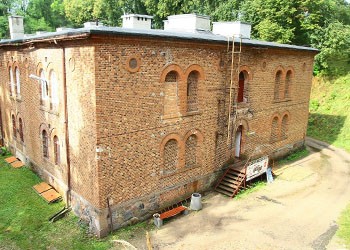
Miecz Barracks in the Sword Bastion
When entering Boyen Fortress through the Lötzen Gate, one of three barracks buildings, the „Miecz“ barracks, is located on the left-hand side. Originally, up to 500 soldiers could be accommodated here on two floors, and up to 2,500 in the entire fortress.
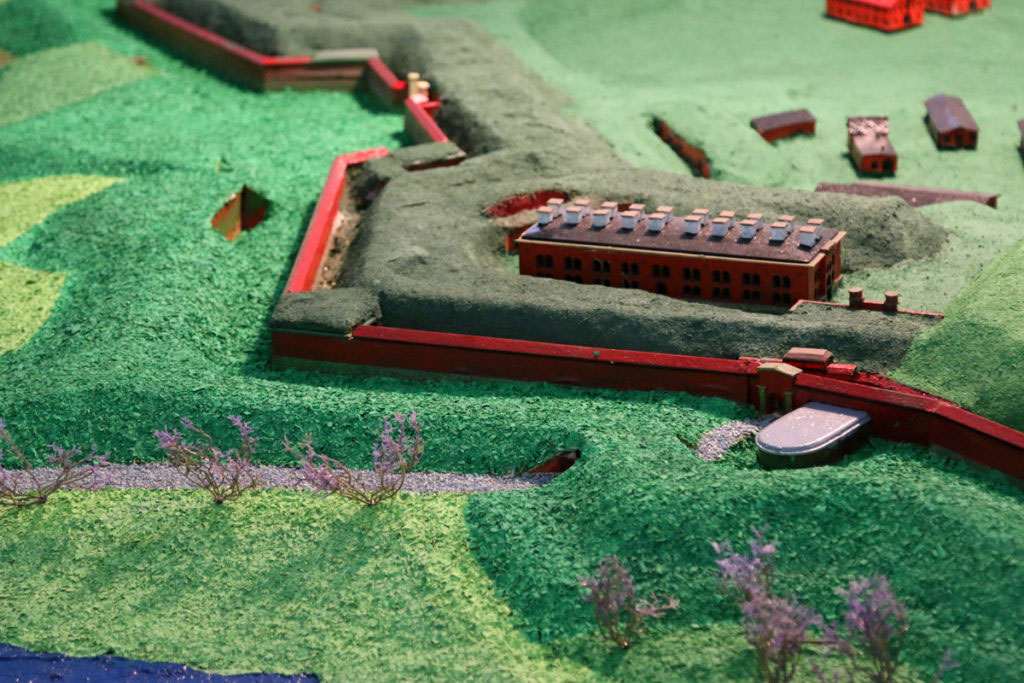
Today, the ground floor of the Miecz barracks houses an interesting museum with many exhibits on everyday life in the fortress, as well as a model of the fortress. A special exhibition is dedicated to the history of the Solidarność movement in Giżycko.
Those who want to immerse themselves even deeper into military life can stay at the youth hostel on the upper floor of the barracks, whose rooms are furnished in military style. Further information
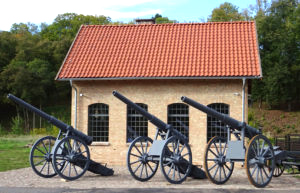
armourer's workshop
The armourer's workshop is located in the fortress courtyard. This is where the forges and workshops were located, where the weapons of the fortress and its garrison were repaired (except for artillery weapons).
The completely renovated building now houses a small exhibition providing information about the duties of a former armourer. Six replicas of artillery weapons can be admired on the square in front of the workshop. Further information
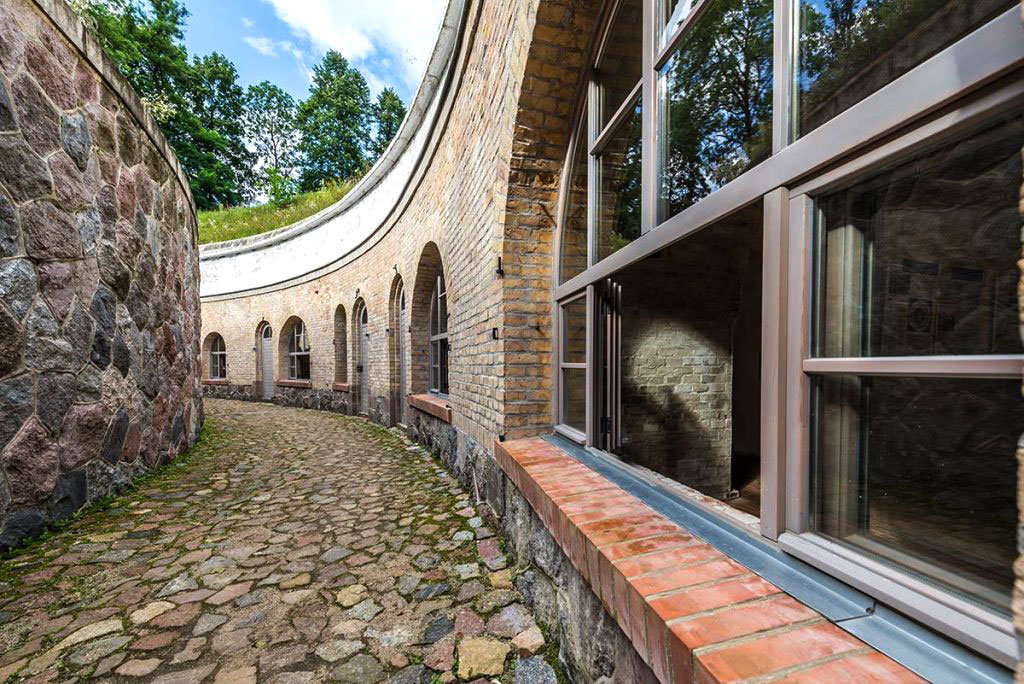
Gunpowder laboratory in the Bastion Right
The powder laboratory, hidden in the bastion to the right of the fortress walls, has also been extensively restored and now houses an exhibition on military equipment and weapons of all kinds and their destructive power. The main exhibit is a replica of the 12 cm ring cannon from 1871.
Furthermore, a film by Bogusław Wołoszański provides information about the Boyen Fortress. Further information
Other interesting objects in the Boyen Fortress
There are many more exciting places and stories to discover in the Boyen Fortress. These include the bastions. Louis, Leopold, Hermann and light and the Rastenburg Gate.
The following is also exciting: water gate, which provided direct access to Lake Löwentin (Niegocin) and enabled supplies to be delivered to the fortress garrison by water via a bascule bridge.
Likewise, the hidden powder gate between the bastions of law and the sword, also war gate In times of defence, units located outside the fortress were supplied with ammunition via this gate. Further information
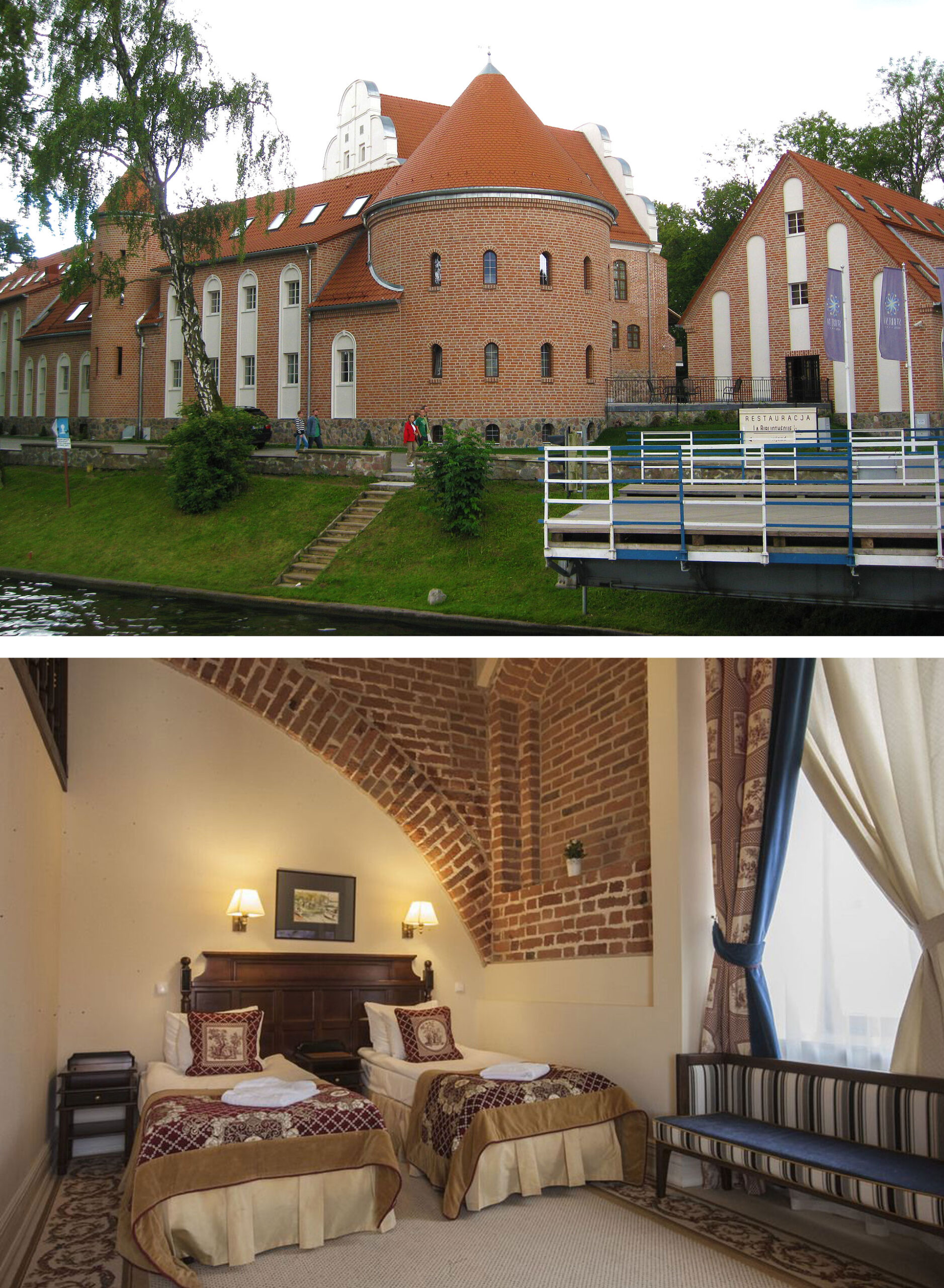
Former fortified castle of Lötzen in Gizycko
The fortified castle of Lötzen on the isthmus outside the fortress dates back to a castle built by the Teutonic Order in the 13th/14th century. It was part of a whole series of border castles built by the Teutonic Order during this period.
It was destroyed and rebuilt several times as a result of armed conflicts. In 1560 and 1614, it was rebuilt in the late Renaissance style as a fortified castle with bastion fortifications for defence. After Prussian secularisation, it was used as a hunting lodge and, after the construction of Boyen Fortress, was inhabited by the fortress commander.
One of the castle's four wings has been preserved to this day, while the other three were rebuilt in 2011 with brick façades. A hotel with a marina, spa and upscale restaurants caters to even the most discerning visitors to the fortress, located directly on the military strategic swing bridge from 1889 over the Łuczański Canal (Lötzen Canal).
St. Bruno Hotel
1 Św. Brunona Street
11-500 Giżycko, Poland
T: +48 877 326 500
E: recepcja@hotelstbruno.pl
Experience the towns of Boyen and Gizycko
Advertising and Tourist Information Centre in Giżycko
2 Generała Zajączka Street, 11-500 Giżycko
+48 87 428 52 65 | +48 502 062 188
History
The strategic location of Lötzen as one of the few „gateways“ through the natural barrier of the Masurian Lakes was obvious. Already during the Second Northern War for supremacy in the Baltic region in 1655-60 and later in the Coalition Wars (1807) as well as during Napoleon's Russian campaign in 1812, Lötzen was considered an important transit point for large combat units.
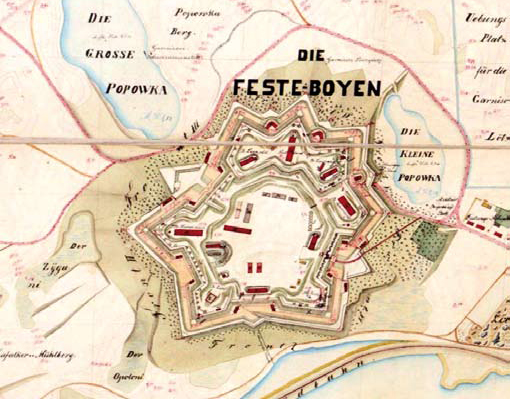
At the beginning of the 19th century, the German Empire began considering ways to secure the borders of East Prussia against a possible threat from the east, and Lötzen quickly became a focus of attention. With diplomatic relations with Russia cooling, there was no longer any hesitation, and on 4 September 1844, at 6 p.m., the foundation stone for the construction of the Boyen Fortress was ceremoniously laid on behalf of King Frederick William IV. During the course of construction work until 1860, a Prussian artillery fort with six bastions (see Architecture) was built, which could accommodate up to 2,500 soldiers.
In 1860, the first regiments ceremoniously took up quarters in the fortress. Until around 1913, continuous modernisation measures and the gradual conversion from the originally independent fortress to a strong artillery-armed barrier fort took place. Before the First World War, massive field positions were also built in the lake belt around Lötzen, the so-called Masurian Lake Position.
Shortly afterwards, World War I broke out and at the end of 1914 there was heavy fighting in and around Lötzen, which was successfully repelled. Later on, the first battle took place on the Masurian Lakes, in which Russia was defeated by German troops. The Boyen Fortress was an important starting point and cornerstone of the East Prussian front. The field positions were subsequently expanded to include up to 255 concrete structures and withstood all Russian attacks. By the end of the First World War, Fort Boyen had become a symbol of German resistance, and high-ranking personalities of the German Empire visited the site, including Emperor Wilhelm II, Prince Joachim of Prussia, Admiral Tirpitz and the Bavarian heir to the throne.
The fortifications on Germany's southern and eastern borders were exempt from the disarmament demands of the Allied victorious powers after the First World War. The Boyen Fortress was meticulously maintained during the interwar period and served as a symbolic military training location.
From 1936 onwards, the field positions were further fortified. During the Second World War, the Lötzen fortified area served to secure the rear of the Eastern Front. With the Wolf's Lair, Mauerwald and Hochwald bunker complexes, numerous command posts were established north of Gizycko.
With the increasing successes of the Soviet armed forces and the gradual shift of the Eastern Front towards Germany, Lötzen was further reinforced as an important location and supplied with personnel, weapons and food at the end of 1944. However, the cold winter led to thick layers of ice forming on the Masurian Lakes, which even tanks could drive on. This meant that nothing stood in the way of the Russian offensive. Without its natural barriers, Lötzen lost its defensive value. The location was evacuated except for a few defenders and was taken on 26 January 1945 after minor fighting.
Until 1956, the fort was a training site for the Polish People's Army and a starting point for mine clearance and systematic demolition of field positions. In 1957, Boyen Fort was decommissioned and handed over to the civil authorities. Listed as a historic monument in 1973, but exposed to numerous thefts and acts of arson, the first conservation measures were begun in 1993 by the Association of Friends of Boyen Fortress.
Since 2009, the property has been managed by the Giżyckie Centrum Kultury (Giżycko Cultural Centre) and is increasingly being promoted for tourism. With its membership in the European Fortress Tourism and Fortress Marketing Network in 2019, Boyen Station became part of the European cultural route FORTE CULTURA®.


Architecture
The star-shaped New Prussian fortress was built between 1844 and 1860 based on designs by General Ernst Ludwig von Aster and Colonel Johann von Bress-Winiary. Three of the fortress's six bastions were named after General von Boyen's first names: Hermann, Ludwig and Leopold. The other three were named after symbols from the family coat of arms: sword, law and light. Four gates with neo-Gothic elements provided access: the Lötzen and Rastenburg gates, the water gate and the powder gate. Inside the fortress are numerous functional and service buildings, such as three-storey barracks, a bakery, powder magazines, an armourer's workshop and much more.
A 2303 m long and up to 5 m high free-standing Carnot wall with embrasures surrounded the fortress. In front of and behind it were the inner and outer ramparts, separated by dry moats. Other elements included casemated bastions, artillery casemates in the bastion shoulders and the caponier at the Lötzen Gate.
From around 1870 onwards, a long process of extensive modernisation began to reinforce the fortress in response to rapidly advancing weapon technologies and the introduction of high-explosive shells. Walls and ramparts were further reinforced, vaults were covered with a layer of concrete, magazines and infantry shelters were built, and rotating and armoured infantry watchtowers were installed.
At the beginning of the 20th century, fortified field positions were built to secure the site and the region. Robert Kempa's extensively illustrated brochure „Die Feste Byoen in Lötzen“ (ISBN-13: 978-8361349167) describes the history and construction of the fortress in detail.


Boyen Castle is not only strategically located as a fortress on an isthmus between two lakes, but also very centrally located in the middle of the Land of 1000 Lakes, one of the most charming landscapes in Europe.
Gizycko is often referred to as the „summer capital of Poland“. The attractive natural landscape provides an excellent basis for all kinds of active recreation. There is something for everyone, with cycling, sailing, houseboat and canoe trips, swimming and diving, and ball sports in and around the water. Nature walks to see bison in the bird paradise of the Borecka Primeval Forest, horse riding excursions, mushroom picking trips and fishing complete the varied programme.
Right next to Boyen Fortress, a wake park and a high ropes course invite visitors to enjoy active outdoor pursuits. Even the cold winters in Gizycko offer pure enjoyment of nature with ice sailing, ice skating, snowmobiling, ice fishing, ice diving or (horse-drawn) sleigh rides, as does the ski resort in Okrągłe, 28 km away, with its ski lifts.


Events in the Boyen Fortress
Operation Boyen
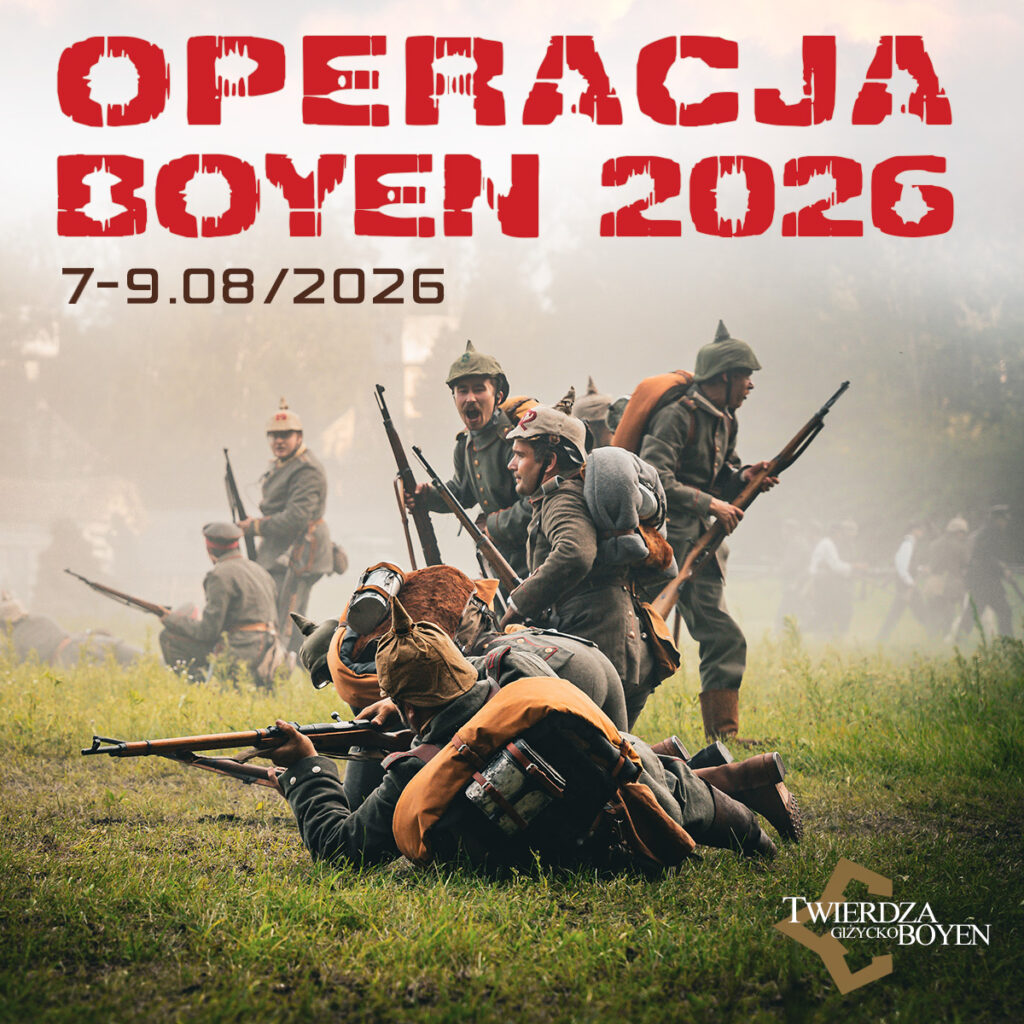
Operation Boyen is an extraordinary annual re-enactment spectacle in the Boyen Fortress in Giżycko, in which war events of the early 20th century are re-enacted. The main point of the programme is a realistic Fight staging with participants from Poland and abroad, including horse cavalry and spectacular pyrotechnic effects. Operation Boyen 2026 is three days full of stories, emotions and passions - ideal for military enthusiasts, families and anyone who wants to see an extraordinary spectacle with their own eyes.
Discover this and Further events at the Boyen Fortress.
Contact us

Boyen Fortress in Gizycko
ul. Turystyczna 1, 11-500 Giżycko
Phone: +48 798 612 924
Web: twierdza.gizycko.pl
e-mail
Wenn du dies siehst, nachdem deine Seite vollständig geladen wurde, fehlen leafletJS-Dateien.
 Deutsch
  English (UK)
  Français
  Italiano
  Polski
  Español
Schreibe einen Kommentar