
FORTE CULTURA Stop: Willemstad (NL), the fortified model city
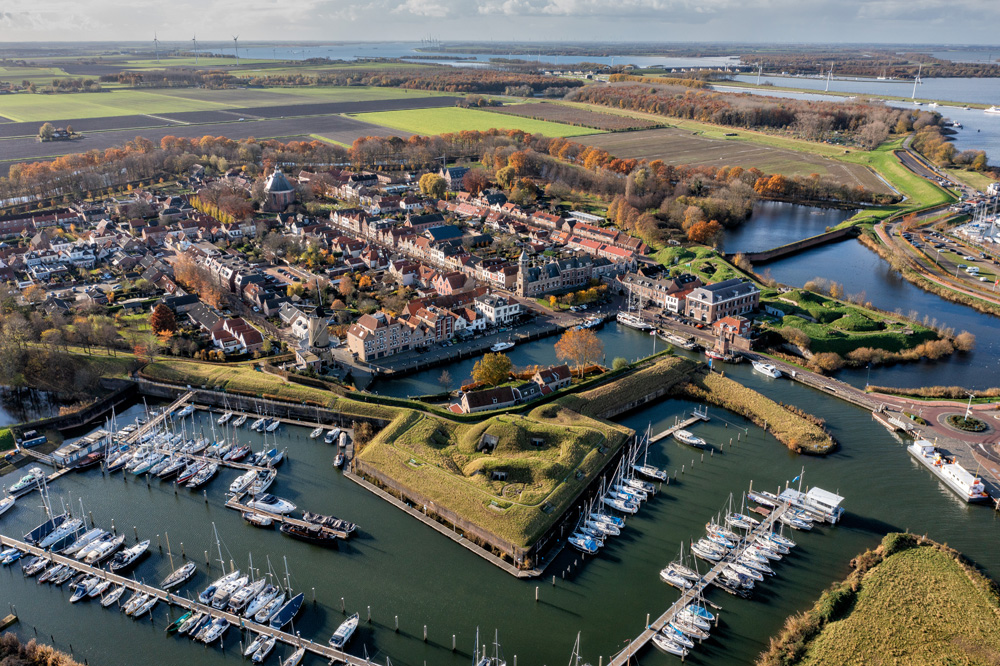
Willemstad – The star-shaped ideal city named after Oranien
Fortress of the Seven Provinces – Where history lives within the ramparts
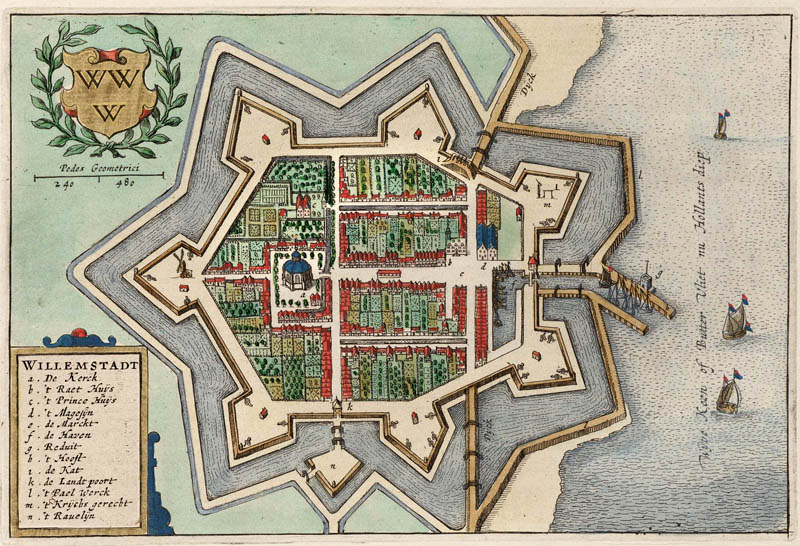
The fortified model city of Willemstad was founded in the 16th century as part of Holland’s defences. In 1583, William of Orange ordered the city to be laid out, resulting in the construction of a unique, seven-pointed, star-shaped model fortified city. Due to its location on the Hollands Diep and the Volkerak, Willemstad played an important military role: the town secured access to Holland via the estuaries.
Later, several forts were added around the fortified model town of Willemstad, creating a system of fortifications that became an important part of the Zuiderwaterlinie. Even today, the city walls, bastions and surrounding forts are clearly visible and tell the story of centuries of defence using water and military engineering.
Are you interested in the history of Willemstad? If so, why not visit the Mauritshuis during your day trip?.

Discover the fortified ideal city Discover Willemstad:

Willemstad is a fortified ideal city. She later became a Major fortress system expanded to include outlying forts and incorporated into the Zuiderwaterlinie defence line.
Mauritshuis
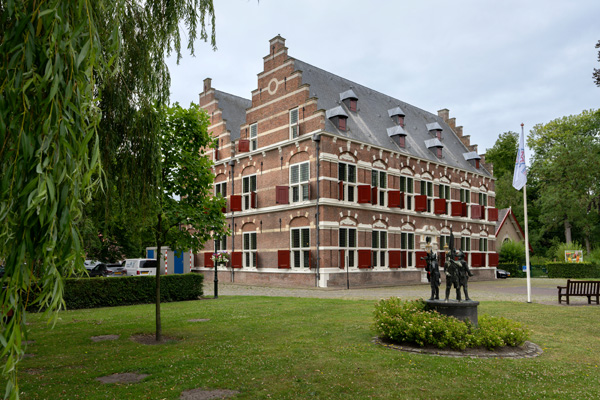
The Mauritshuis was built in 1623 on the orders of Prince Maurits of Orange as a hunting lodge and country house. Owing to the strategic location of the fortified ‘ideal city’ of Willemstad, the building later also took on a military role and was used as a military hospital and barracks.
Today, the Mauritshuis houses the Zuiderwaterlinie visitor centre, where you can discover the history of Willemstad: from a princely country estate to an important fortress within the Zuiderwaterlinie.
Fort de Hel
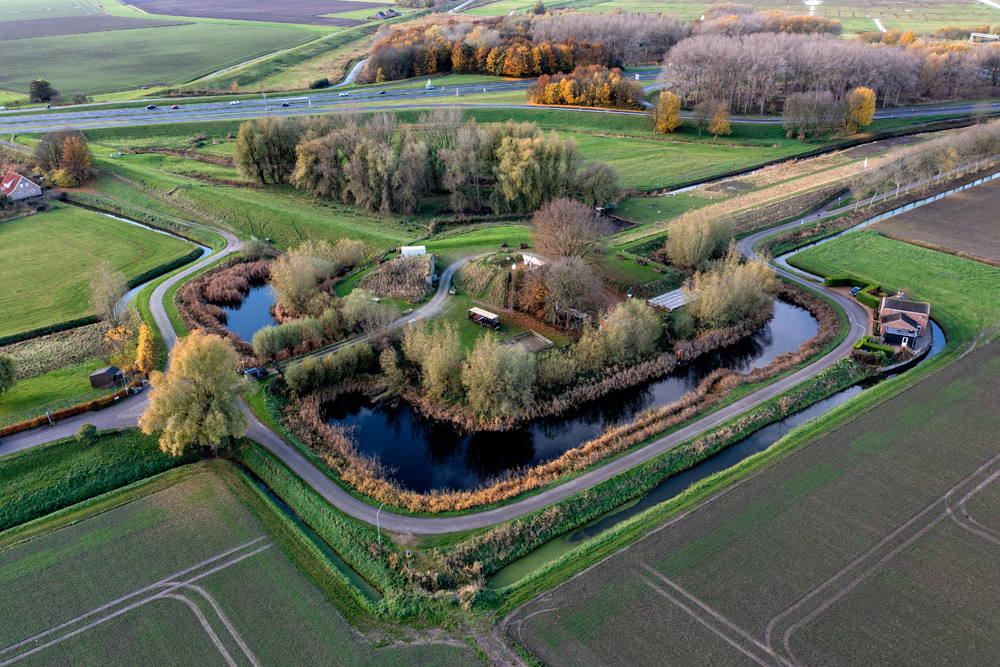
Fort de Hel was built during the Napoleonic era to defend access to Holland via the estuaries. The fort was part of Willemstad’s defences and, together with other forts, protected the important waterways around the city.
During a visit, you’ll learn more about the fort’s military history.
Fort Sabina
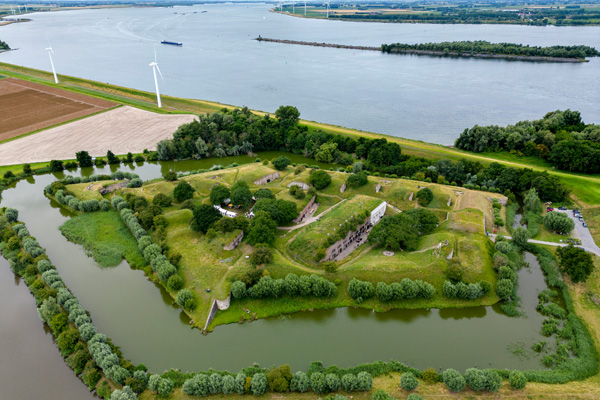
Fort Sabina is the largest fortress in the Willemstad defences and was built during the Napoleonic era. Thanks to its strategic location, the fortress was able to overlook and defend a large part of the surrounding area.
The fortress has been largely preserved. This allows visitors to experience the history of the Zuiderwaterlinie at first hand.
Fort Buitensluis
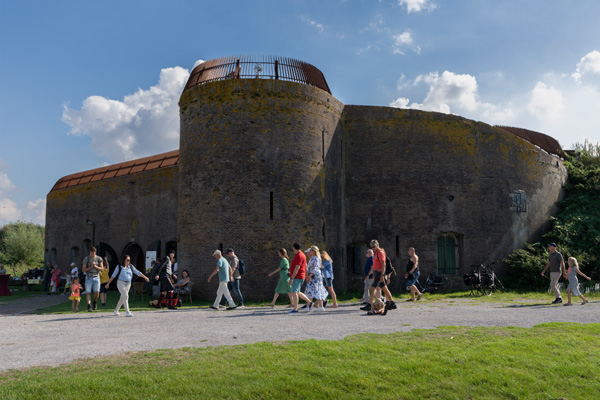
Buitensluis Fort was built in the 18th century to protect the waterways around the fortified model city of Willemstad. The fort was later further reinforced with, amongst other things, concrete structures and bunkers.
Fort Prince Frederik
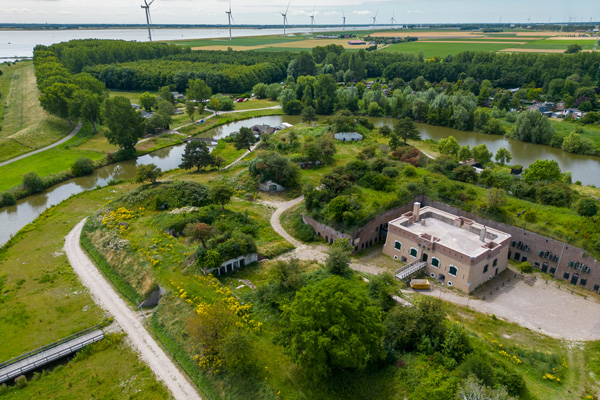
Fort Prince Frederik was built during the Napoleonic era and formed part of the defences against the inlets leading towards Holland. Together with the other forts of the „Stelling van Willemstad“, it protected the open waters around the fortified town.
A stroll through the fortified model city of Willemstad
The best way to explore Willemstad is to take a stroll along the historic ramparts. The original star-shaped layout of the fortress is still clearly visible, and from the ramparts you can enjoy views of the town, the harbour and the surrounding countryside.
Cycling
The area around Willemstad is ideal for exploring by bike. The „Fortenrondje“ route takes you past the main forts around the town, including Fort de Hel and Fort Sabina, and shows how the various defensive structures together formed the „Stelling van Willemstad“.
History of the fortified ideal city of Willemstad
Willemstad was founded on a piece of land protected by dykes called Ruigenhil, which was reclaimed as polder land around 1565 by Jan IV van Glymes, the Margrave of Bergen op Zoom. Due to the strategic position on an important waterway between Holland, Zeeland and North Brabant, he ordered William of Orange In 1583, to turn the village into a fortress in order to halt the Spanish advance following the capture of Steenbergen. After William’s assassination in 1584, his son, Prince Maurits, which granted the town its town charter in 1585 and officially gave it the name Willemstad.
Over the centuries, the town proved its military importance on several occasions. In 1793, it withstood a French siege was in place, but had to be abandoned following the fall of Bergen op Zoom. During the French period (1809–1813), Willemstad served as a key fortress for defence against England; Napoleon Bonaparte visited the town in 1811 and had a powder magazine built. Following Belgium’s secession, it became part of the Noord-Brabant Water Line and, from 1874, was the centre of the „The Hollands Diep and Volkerak Barrage“, in order to secure access to the Netherlands by water.
Although its status as a fortress Officially abolished in 1926 During the Second World War, the fortifications once again played a significant role. On 14 May 1940, German troops occupied the town and later built bunkers and casemates into the old ramparts, which are now regarded as part of the Atlantic Wall. Since 1970, the historic town centre and the fortifications have been listed as Listed buildings.
The Architecture of the Fortified Ideal City of Willemstad
The architecture of Willemstad is a classic example of Dutch fortification design. The original design, dating from 1583, by Abraham Andrieszn called for a regular hexagon with ramparts and five bastions, with the harbour entrance forming the sixth point. Under Prince Maurits, the complex was built from 1587 onwards by the master of fortifications Adriaen Anthonisz (and later, in 1598, based on plans by Johan van Rijswijck) into a seven-pointed star shape extended. The seven bastions were built in accordance with the seven provinces which had joined forces in the fight against Spain (Groningen, Gelderland, Zeeland, Utrecht, Holland, Friesland and Overijssel).
Two gates were built to protect the fortified ideal city: the Landpoort and the Waterpoort, which were, however, demolished in the late 19th and early 20th centuries. Inside the fortress are important monuments such as the Mauritshuis (1623), which served as the Prince’s Court, and the Koepelkerk (1607). The Koepelkerk is of particular significance in the history of architecture, as it is the first church in the Netherlands to have been built specifically for Protestant worship and as Central building on an octagonal floor plan was designed.
The fortress is surrounded by a Cluster of external forts surrounded by, including Fort Sabina, Fort de Hel and Fort Bovensluis, which were built in the 18th century to reinforce the line of defence. A distinctive feature of the region are the ones introduced under Napoleon „Tours Modèles“ – square, bombproof stone towers, examples of which can still be seen today in the surrounding forts. The town’s current appearance still corresponds almost entirely to the original design, and the ramparts now serve as walking trails.
Nature and military history blend seamlessly around Willemstad. The forts are scattered across the green countryside surrounding the fortified town and, taken together, form a lovely circular route just waiting to be explored. Along the walking and cycling paths, you’ll pass bodies of water, polders and former floodplains, where you can clearly see how the landscape was once used to defend the town.
events
There’s plenty going on in Willemstad and the surrounding area. Take a look at the events calendar to find out what’s on locally.

Partner

The Zuiderwaterlinie is regarded as the oldest, longest and most frequently used water defence line in the Netherlands: a unique chain of historic fortified towns, fortresses, redoubts, dykes and floodplains that defended the country for centuries with the help of water. Zuiderwaterlinie Alliance is an important partner of FORTE CULTURA, and selected fortresses of the Zuiderwaterlinie form part of our European Cultural Route.
Wenn du dies siehst, nachdem deine Seite vollständig geladen wurde, fehlen leafletJS-Dateien.
 Deutsch
  English (UK)
  Français
  Italiano
  Polski
  Español
Schreibe einen Kommentar